
Consumer & retail

Restaurants & food service. The menu is a regulated document.

Guests read it in two seconds, on a phone.

Restaurant chains, cloud kitchens, cafés and caterers selling at the counter, at the table and through delivery apps, where every menu carries calories, allergens and a price the guest has to trust. We design the menus, ordering and loyalty journeys that hold the declarations and stay fast at the pass and on the phone.

The number we move
Share of orders through your own channels
Where we work in restaurants & food service
  • Quick-service restaurants
  • Casual & fine dining
  • Cloud kitchens
  • Cafés & bakeries
  • Delivery partnerships
  • Institutional catering
Rules mapped
8 rules · 5 areas
Disciplines that lead
ProductMarketing
Frameworks we build to
DPDP Act 2023 — Digital Personal Data Protection Act, 2023PCI DSS v4.0.1 — Payment Card Industry Data Security StandardWCAG 2.2 AA — Web Content Accessibility GuidelinesCore Web Vitals — Loading, interactivity and visual stability
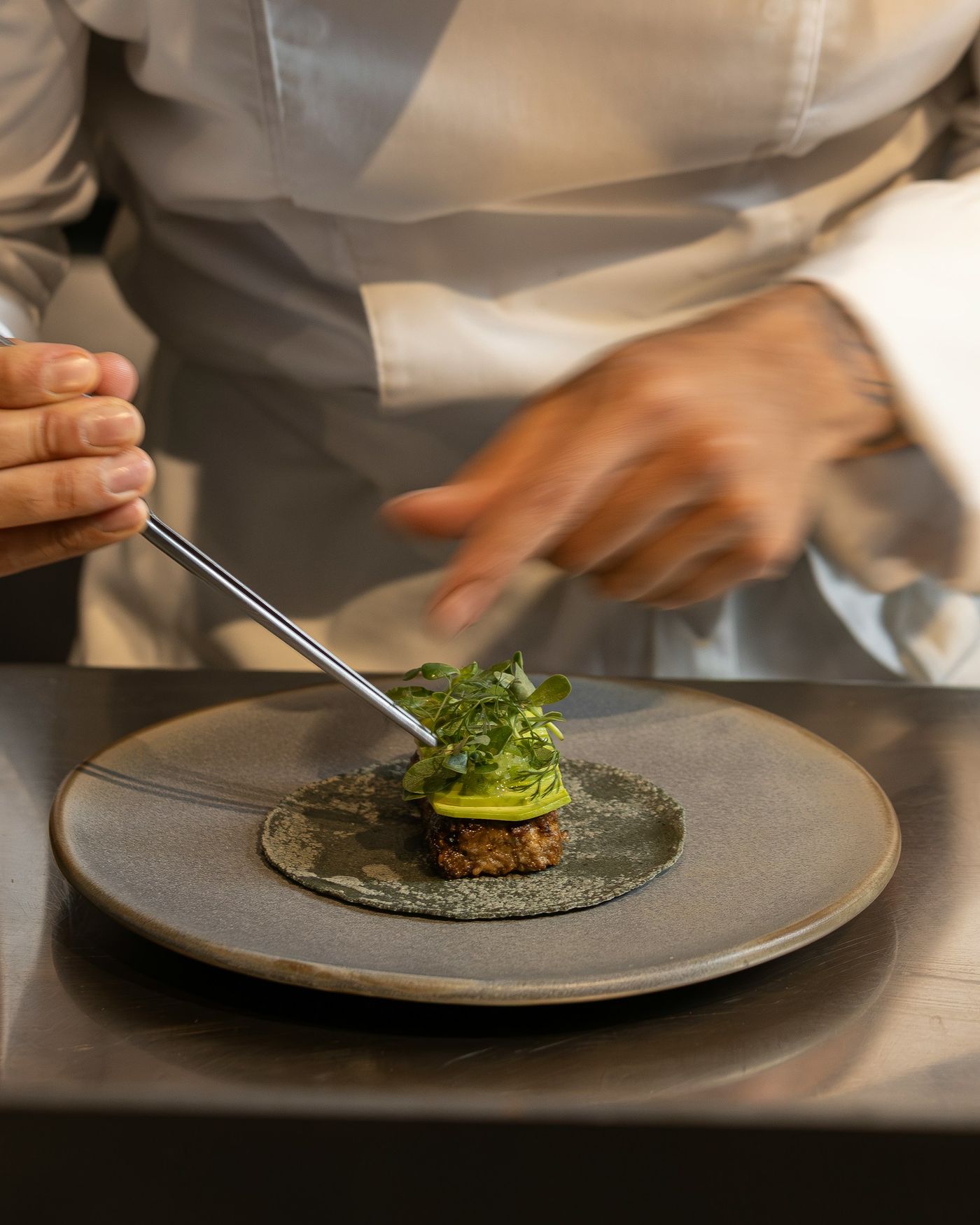
A chef uses tweezers to place herbs on a plated dish on a stainless-steel pass
Restaurants & food serviceEvery plate on the pass now carries a declaration.

Where the rules biteMap of all forty-one industries

  • Claims Advertising & claims: Often shapes the work
  • Regulator Sector regulator: Shapes most of the work
  • Payments Payments: Often shapes the work
  • Data Personal data: Often shapes the work
  • Security Security & incidents: Sometimes shapes the work
  • Access Accessibility: Often shapes the work
  • AI AI governance: Sometimes shapes the work

What is shifting

The menu moved onto the phone, and the bill came under scrutiny.

Calories and allergens went onto menus, service charges stopped being automatic, and delivery platforms became the tax collector for their orders. Each shift names what it demands, with a fact you can check.

Hands arrange a cardboard takeaway box and two plain food containers on a pale yellow surface
The dining room now reaches every doorstep.
  1. Calories and allergens moved onto the menu itself.

    It demandsMenus, boards and ordering screens that carry the declarations without losing their appetite appeal.

    SignalFSSAI’s display rules require chains with a central licence or ten or more outlets to show kcal per serving on menus; every outlet marks allergens and veg or non-veg.

  2. The service charge stopped being automatic.

    It demandsBills and payment screens that show any service charge as optional and never add it by default.

    SignalOn 28 March 2025 the Delhi High Court upheld the CCPA’s 2022 guidelines: a service charge cannot be added to a bill by default or under another name.

  3. Delivery apps became the tax collector for their orders.

    It demandsMenu, price and invoice data kept consistent between your own channels and every platform.

    SignalSince 1 January 2022, e-commerce operators pay the GST on restaurant services ordered through them, under section 9(5) of the CGST Act.

  4. Delivery platforms must show the menu facts too.

    It demandsOne recipe and menu record feeding your own app and every aggregator listing.

    SignalFSSAI’s labelling and display rules require e-commerce food businesses to obtain calorie, allergen and nutrition information from restaurants and show it on their platforms.

The rulebook

Every menu declares, every bill explains.

The food regulator’s licensing and display rules, the consumer authority’s guidelines on service charges and dark patterns, and the data law, read for a restaurant group. Your food-safety and legal teams keep sign-off.

Frameworks we build to

  • DPDP Act 2023 — Digital Personal Data Protection Act, 2023
  • PCI DSS v4.0.1 — Payment Card Industry Data Security Standard
  • WCAG 2.2 AA — Web Content Accessibility Guidelines
  • Core Web Vitals — Loading, interactivity and visual stability

Frameworks we design and build to — not a claim of certification.

Advertising & claims

Often shapes the work

  1. Central Consumer Protection Authority

    CCPA dark-patterns guidelines, 2023

    Drip pricing — packaging, platform or convenience fees revealed only at checkout — and false urgency are named unfair trade practices, among thirteen in all.

    We designEvery fee appears with the price on the first screen it applies to.

    CCPA · Guidelines for Prevention and Regulation of Dark Patterns, 30 November 2023 Official text: CCPA dark-patterns guidelines, 2023

  2. Advertising Standards Council of India

    ASCI guidelines for food and beverage advertising

    Nutrition and health benefits must be substantiated; advertising should not encourage excessive consumption or show food differently from what is served.

    We designFood styling and portion shots match what the kitchen serves.

    ASCI · Guidelines for Advertising of Food and Beverages Official text: ASCI guidelines for food and beverage advertising

Sector regulator

Shapes most of the work

  1. Food Safety and Standards Authority of India

    FSSAI licensing and registration

    Every food business holds an FSSAI licence or registration; its 14-digit number is displayed at the premises and, since 1 October 2021, printed on bills, invoices and cash memos.

    We designBills, receipts and digital invoices print the licence number from one outlet record.

    FSS (Licensing and Registration of Food Businesses) Regulations, 2011 · FSSAI order of 8 June 2021

  2. Food Safety and Standards Authority of India

    FSS (Labelling and Display) Regulations, 2020 — menus

    Chains with a central licence or ten or more outlets show kcal per serving and the 2,000 kcal reference line on menus; all show allergens and the veg or non-veg mark, give nutrition information on request, and e-commerce platforms show the same.

    We designMenu templates hold every declaration, fed from one recipe record for boards, apps and platforms.

    FSSAI · Labelling and Display Regulations, 2020 · regulation 9 (compendium of 9 September 2025) Official text: FSS (Labelling and Display) Regulations, 2020 — menus

  3. Central Consumer Protection Authority

    CCPA service-charge guidelines, 2022

    No service charge added by default or under another name; it is voluntary, entry cannot depend on it, and GST cannot be levied on it as part of the food bill. The Delhi High Court upheld the guidelines on 28 March 2025.

    We designBills, table-payment screens and delivery checkouts show any service charge as an opt-in line.

    CCPA · Guidelines on levy of service charge in hotels and restaurants, 4 July 2022 Official text: CCPA service-charge guidelines, 2022

Payments

Often shapes the work

  1. PCI Security Standards Council

    PCI DSS v4.0.1

    Card data protection for online ordering and table payments, including the requirements on scripts running on payment pages in force since 31 March 2025.

    We designOrdering and payment pages ship with a script inventory and change detection.

    PCI SSC · PCI DSS v4.0.1 Official text: PCI DSS v4.0.1

Personal data

Often shapes the work

  1. Ministry of Electronics and IT

    DPDP Act, 2023 and DPDP Rules, 2025

    Loyalty, reservations and delivery addresses collected per purpose with consent, withdrawal as easy as consent, and breach reporting to the Data Protection Board.

    We designLoyalty sign-up asks only for what the programme uses, with consent logged per purpose.

    DPDP Act, 2023 · DPDP Rules, 2025 (core obligations from 13 May 2027) Official text: DPDP Act, 2023 and DPDP Rules, 2025

Accessibility

Often shapes the work

  1. W3C

    WCAG 2.2 AA

    Ordering apps and digital menus usable with a screen reader, a keyboard and zoom, allergen filters included.

    We designMenus and allergen filters are built as real, readable controls.

    W3C · WCAG 2.2 Official text: WCAG 2.2 AA

Compiled 3 October 2026. Our reading of typical programmes, not legal advice. Rules change; your counsel confirms how each one applies to you.

Challenges

Where restaurants & food service loses customers and time.

What comes up first in most restaurants & food service conversations — outside, at the screen, and inside, in the operation.

Your customers

  1. Know what is in it

    Allergens, calories and veg or non-veg marks clear on every menu and ordering screen.

  2. A bill without surprises

    Prices, packaging, delivery fees and any service charge shown before the guest commits.

  3. Order fast, even at peak

    Ordering that works in two taps at a crowded table or on a slow connection.

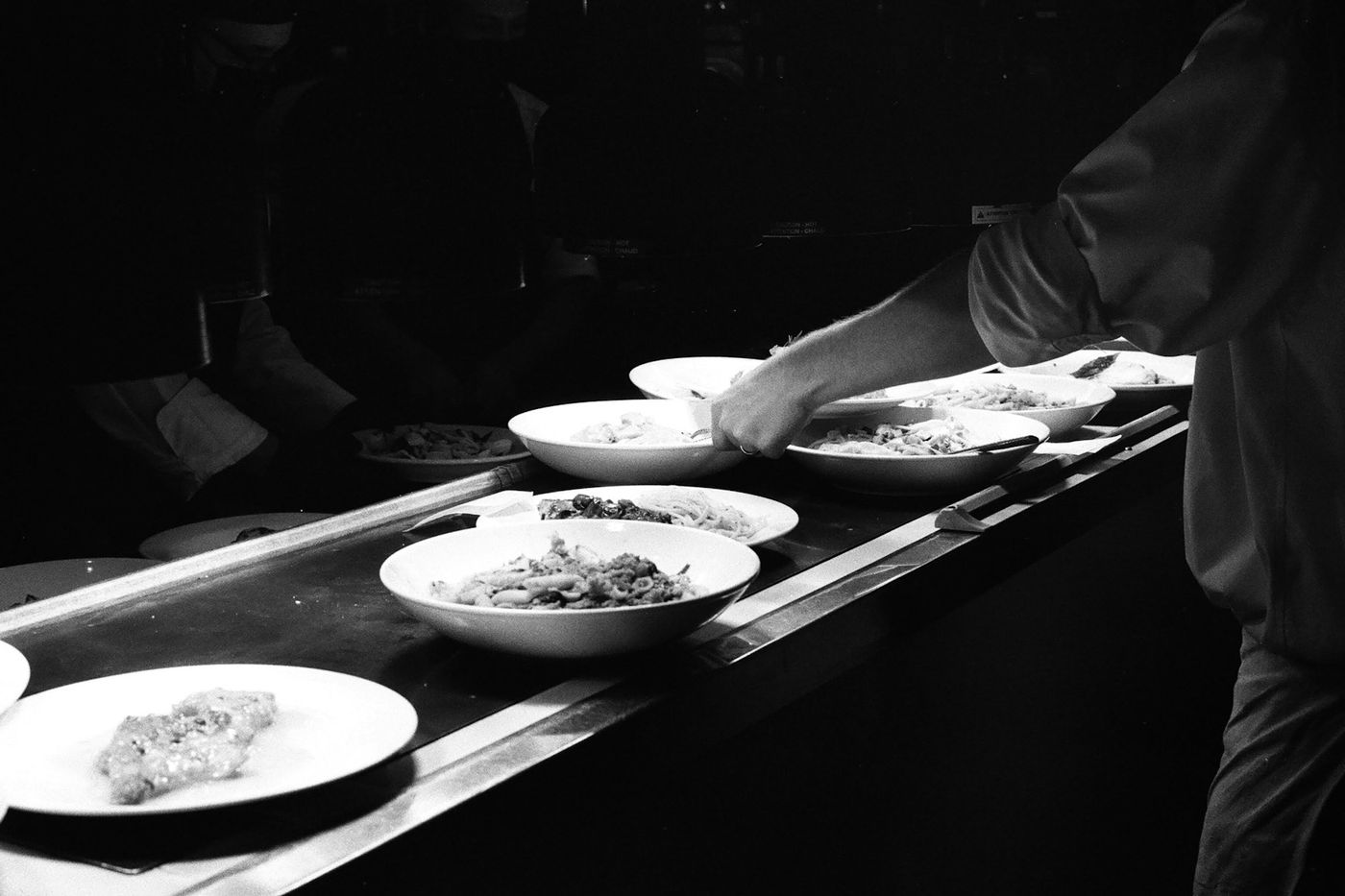
A black-and-white view of plated dishes lined up on a kitchen pass as a chef reaches across
Service runs on minutes; the rules run on every plate.

Your operation

  1. Menus everywhere at once

    Dine-in, takeaway, your app and every aggregator need the same items, prices and declarations.

  2. Platform dependence

    Commission-heavy orders grow while the guest relationship sits with the platform.

  3. Recipe changes ripple

    One ingredient swap changes allergens, calories and claims across every channel.

What we build

The disciplines behind a typical restaurants & food service programme.

A typical programme here draws on each discipline in this mix. Every line names what it builds for the industry and links to the capability that does the work.

Leads Core Supports Share of a typical programme, by role · illustrative
  1. Ordering, table-payment and loyalty journeys that stay fast at peak and carry every declaration.

  2. Loyalty, offers and reorder nudges that grow your own channels, on one consented guest record.

  3. 03

    Brand Design

    Core

    Menu systems and restaurant identities that hold the declarations and still make guests hungry.

  4. One menu and recipe record feeding boards, your app, the POS and every aggregator.

  5. Launch campaigns, menu photography and creator content checked against the advertising codes.

  6. 06

    AI Design

    Supports

    Ordering and guest assistants grounded in the recipe record, with allergen answers that never guess.

Programmes

Fix the menu and the bill first, then grow your own channels.

The way in reads every menu, ordering flow and bill against the display and service-charge rules, and ranks the fixes by order value and by risk. Lengths are typical, never promised.

The way in

Menu, bill and ordering audit

We order the way guests do — at the table, at the counter, on your app and on each platform — and read every menu and bill against the display and service-charge rules.

Package
Sprint · Fixed fee
Typical length
1–2 weeks
It sets
Share of orders through your own channels, as a baseline
  • Product experience audit
  • Technical & code audit

What it hands over

  • A declarations gap register, outlet by outlet and channel by channel
  • A bill and checkout design that shows every charge up front
  • A plan for one menu record across every channel
Start here
  1. 02Project · 8–12 weeks

    Own-channel ordering and loyalty

    An ordering app and web flow with loyalty built in, so repeat guests order direct without losing anything a platform gives them.

    MovesShare of orders through your own channels

    Services: End-to-end UX & UI design · Web or mobile app · Loyalty strategy & programme design

    Enquire about Own-channel ordering and loyalty
  2. 03Project · 6–10 weeks

    Menu and recipe record

    One record per dish holding ingredients, allergens, calories and prices, feeding boards, the POS, your app and every aggregator.

    MovesMenu-data accuracy across platforms

    Services: Content model & headless CMS · System integration

    Enquire about Menu and recipe record
  3. 04Milestone · 3–6 months

    Restaurant brand and menu system

    Identity, menu architecture and in-store and on-screen systems for a growing group, with the declarations designed in.

    MovesRepeat orders per guest per quarter

    Services: Logo & identity system · Brand guidelines · Template systems

    Enquire about Restaurant brand and menu system

How success is measured

The number we moveShare of orders through your own channels

  • Share of orders through your own channels
  • Average order value on your own app
  • Menu-data accuracy across platforms
  • Repeat orders per guest per quarter

AI, under the rules

AI takes the order, and never guesses an allergen.

Each use case has an owner, an evaluation set and a log; allergen and nutrition answers come only from the approved recipe record.

Use case 01

Ordering assistant

Measured byOrders completed without staff help

Tested forOWASP LLM01 · Prompt injection

agent / ordering-assistant Guarded
  1. TaskTakes and changes orders in chat or voice from the live menu and the guest’s order history.
  2. GuardrailCannot invent dishes, prices or offers; anything outside the menu goes to staff.
  3. HumanOutlet managers review flagged orders and complaints daily.
  4. LogOrder, menu version and hand-offs.

Ships only with its evaluation set, its guardrail and an owner

Use case 02

Allergen answers

Measured byAnswer accuracy on an agreed evaluation set

Tested forOWASP LLM09 · Misinformation

agent / allergen-answers Guarded
  1. TaskAnswers questions about ingredients and allergens from the approved recipe record.
  2. GuardrailQuotes the recipe record only, says when it cannot be sure, and never tells a guest a dish is safe for an allergy.
  3. HumanThe food-safety lead approves the recipe record and reviews every flagged answer.
  4. LogQuestion, recipe version cited and answer.

Ships only with its evaluation set, its guardrail and an owner

Use case 03

Platform listing check

Measured byMenu-data accuracy across platforms

Tested forOWASP LLM05 · Improper output handling

agent / platform-listing-check Guarded
  1. TaskCompares every aggregator listing with the menu record for prices, declarations and availability.
  2. GuardrailIt only flags differences; changes are made in the menu record, never by the model.
  3. HumanThe digital team resolves every flag.
  4. LogEach mismatch and how it was fixed.

Ships only with its evaluation set, its guardrail and an owner

Work and insights

Case studies stay private until a client approves them.

No restaurants & food service client is named or described without written approval. Here is what we have written that bears on the industry.

A typical programme · composite

A café chain with outlets in five cities moved its recipes into one menu record holding allergens, calories and prices, so its boards, its ordering app and every delivery listing change together when a recipe does.

Anonymised and illustrative: the shape a programme takes, never a named client.

Questions

What brand, digital and operations heads ask us first.

Something else on your mind? Ask us directly

Q.01Do the calorie rules apply to us?

They apply to food service establishments with a central licence or outlets at ten or more locations; allergen and veg or non-veg information applies more widely. We design menus and ordering screens to hold them either way, and your food-safety team confirms what applies to each format.

Q.02Can we still have a service charge?

Only as a voluntary line that guests can decline — never added by default or under another name. We design bills and payment screens that make that choice clear.

Q.03How do we grow our own app without losing aggregator orders?

By making your own channel the easiest place to reorder: loyalty that remembers, menus that load fast and offers that respect consent. Aggregators stay part of the mix; your record keeps the guest relationship.

Q.04Can an assistant answer allergy questions?

It can quote the approved recipe record and say when it cannot be sure, but it never tells a guest that a dish is safe for their allergy. That conversation stays with your staff.

Let’s build what happens next.

Tell us what you’re building. We’ll answer straight.

Book a discovery call

Three ways to start

  1. 01About 2 minutes

    A quick question

    You get A reply from a lead, not a sales queue

  2. 02About 8 minutesMost useful

    A project brief

    You get Options and a first scope after one call

  3. 03About 15 minutes

    A formal RFQ or RFP

    You get Receipt confirmed and a named bid lead

Every engagement starts with a written scope and a quote agreed before work begins. How each package is priced