Capability 01 · The work that runs itself
Marketing runs every hour. Your team should not have to.
AI-Driven Marketing Automation builds the journeys, triggers and agents that carry marketing between campaigns: onboarding, nurture, win-back and renewal running across email, SMS, WhatsApp, push and in-app, decided per person and approved by a human where it matters.
Live: the journey is running with a 10 percent holdout, and every node shows its count, including people suppressed by consent or frequency rules.
Illustrative journey and counts. The send step always has a rule-based fallback.
What we build · 6 parts
Six moving parts, one orchestration layer
Events, decisions, content and consent meet in one place, so a journey can be changed once and behave the same in every channel.

-
Lifecycle journey design & build
Welcome, onboarding, nurture, cart and browse recovery, win-back and renewal journeys, each with entry rules, exit criteria, suppression and a holdout group.
Journeys · triggers -
Platform set-up & migration
Implementation or replatforming of your marketing automation stack, with data model, subscriber states and journeys rebuilt rather than copied across.
HubSpot · Salesforce · Zoho -
Event & trigger infrastructure
Behavioural events from your site, app and product streamed to the platform through server-side tagging, with identity stitched on hashed identifiers.
Server-side · identity -
Next best action & send time
Models that choose the channel, offer and moment per person from their own history, with fallbacks when confidence is low and a rule-based path always available.
Per-person decisioning -
Agentic marketing operations
Agents that assemble briefs, draft variants, build audiences and run pre-flight QA, with scoped permissions, a person approving every send and a log of every step.
Draft · check · approve -
Consent, preferences & deliverability
A preference centre, consent capture and suppression logic, with SPF, DKIM and DMARC, one-click unsubscribe, sender warm-up and WhatsApp opt-in handled properly.
Consent · inbox placement
Where it sits in the engine
From event to message, with consent checked first.
The path one trigger takes through an automated journey. The highlighted step is where the journey logic lives.
- 01 · Signal Event arrives Trial started, cart left, renewal due: streamed server-side with identity attached.
- 02 · Check Consent & pressure Purpose, channel consent, frequency caps and quiet hours checked before anything runs.
- 03 · Decide Journey step Entry rules, branch, wait and next best action, with a rule-based fallback. Automation
- 04 · Approve Person signs off Campaign sends and new templates wait for a named approver.
- 05 · Measure Against holdout Every journey reports lift against a group that did not receive it.
How it runs · 4 stages
Twelve weeks from first map to always-on
One journey ships early and proves the plumbing. The rest follow on the same rails. Timings are typical, not promised.
Stage 01 of 4Wk 01–03
Map
Current journeys, data sources, channels, consent records and the moments worth automating. The first journey is chosen for value and for the events it forces you to fix.
Produces
- Journey inventory
- Event & data map
- Automation backlog
Stage 02 of 4Wk 03–07
Build
Data model, event tracking, subscriber states and content templates built, with the first journey assembled end to end and tested against real profiles.
Produces
- Event tracking
- Data model
- First journey live
Stage 03 of 4Wk 06–11
Automate
The remaining journeys built in priority order, decisioning introduced where there is enough history, and guardrails set: frequency caps, quiet hours and pressure rules.
Produces
- Journey set
- Decisioning rules
- Contact guardrails
Stage 04 of 4Wk 11–12
Operate
Handover with runbooks, a monthly review of journey performance against holdouts, and a backlog of improvements ranked by lift.
Produces
- Runbooks
- Performance dashboard
- Improvement backlog
Journey audit · what you will see
Every journey passes five checks. Or it does not go live.
The audit each journey is held to before launch and every quarter after: consent, pressure, fallback, holdout and a named owner.
| Journey | Consent checked | Frequency cap | Fallback rule | Holdout | Owner |
|---|---|---|---|---|---|
| Trial to paid | Per channel (on track) | 3 a week (on track) | Rule-based (on track) | 10% (on track) | Growth lead |
| Cart recovery | Per channel (on track) | 2 in 48 h (on track) | Rule-based (on track) | 5% (on track) | E-commerce |
| Renewal reminder | Email only (needs attention) | None set (gap) | Rule-based (on track) | None (gap) | Customer success |
| Win-back | Per channel (on track) | 1 a week (on track) | Missing (gap) | 10% (on track) | Unassigned |
What you own
Journeys you can read, change and switch off.
Every journey is configured in your own automation platform, documented step by step, with its holdout and owner named.

| # | Deliverable | Format |
|---|---|---|
| 01 | Journey maps & automation blueprint | Diagrams · board |
| 02 | Configured journeys in your platform | Platform build |
| 03 | Event tracking plan & server-side tagging | Spec · container |
| 04 | Audience, segment & suppression logic | Platform config |
| 05 | Message templates & preference centre | Templates · page |
| 06 | Deliverability set-up & monitoring | DNS · dashboard |
| 07 | Runbooks & admin guides | Docs |
What changes
Fewer, better-timed messages. Measured against a holdout.
Automation succeeds when each journey proves its lift, contact pressure falls and nothing sends without a named approver. They are aims, not guarantees.
-
01
Marketing that keeps working
Revenue-earning journeys run between campaigns, so quiet weeks stop being empty ones.
-
02
Fewer hands on every send
Assembly, checks and audience building are automated. People spend their time on the offer and the words.
-
03
Pressure that is controlled
Frequency caps, quiet hours and suppression applied across channels, so automation raises contact quality rather than contact volume.
Conversion by week, journey vs holdout. The shaded area is the journey’s contribution: what happened to people who received it, minus what happened to a comparable group who did not.
Technologies we work with
Your CRM and automation platform. Orchestration where it helps.
The platforms, messaging channels and orchestration tools we build journeys on, most used first. Named as technologies we work with, not partnerships; model providers run inside an approval step, never around it.
- HubSpot
- Zoho
- Google Tag Manager
- Google Analytics
- n8n
- Make
- Zapier
- Temporal
- Anthropic
- PostgreSQL
- Salesforce
- Twilio
- OpenAI
Frameworks we build to
Consent before the first send. Oversight on every model.
Frameworks each journey is designed and documented against. Frameworks we build to, not certifications we hold.
-
GDPR — General Data Protection Regulation (EU) 2016/679
General Data Protection Regulation (EU) 2016/679
Consent captured per purpose and channel, tracking tags fired only after consent (Consent Mode v2 where Google is used), and erasure requests reaching every connected tool.
-
DPDP Act 2023 — Digital Personal Data Protection Act, 2023
Digital Personal Data Protection Act, 2023
Notices and consent records for India-based customers, with withdrawal honoured in every journey and channel within the same working day.
-
ISO/IEC 27701 — Privacy information management systems
Privacy information management systems
Every marketing tool that holds personal data listed with its purpose, retention and processor terms, and kept current as tools are added.
-
WCAG 2.2 AA — Web Content Accessibility Guidelines
Web Content Accessibility Guidelines
Emails, landing pages and in-app messages checked for contrast, alt text, reading order and keyboard use before they are approved for send.
-
NIST AI RMF 1.0 — AI Risk Management Framework
AI Risk Management Framework
Each model that scores, targets or writes is inventoried with an owner, a measured error rate and a threshold that stops it.
-
EU AI Act — Artificial Intelligence Act (EU) 2024/1689
Artificial Intelligence Act (EU) 2024/1689
AI-generated content labelled where required, targeting and scoring use cases classified by risk, and a person able to override every automated decision.
Services & packages
Set it up once. It works every hour after that.
We build the journeys, triggers and agents that keep marketing running between campaigns, across email, SMS, WhatsApp, push and in-app. Consent is enforced at send time, a person approves every campaign, and every journey has a holdout group so its contribution is measurable.
- Categories
- 05
- Services
- 16
- Packages
- 05
How to buy
- 01Pick services. Enquire about one, or add several to a brief.
- 02Choose how to engage. A sprint, a fixed project or an ongoing team.
- 03Send the brief. We reply within one working day.
Start a project
Ways to engage. Same team, same standard.
Three ways in, from a two-minute question to a formal RFQ. Each is read in full by the lead for the work, and anything already in your brief goes with it.
Or book a thirty-minute call-
01
For a first conversation, a press request, or anything that does not need a scope yet.
You get A reply from a lead, not a sales queue
-
02Most useful
Goals, audiences, a budget band and timing. Enough for us to come back with a shape, not only questions.
You get Options and a first scope after one call
-
03
Your pack, your deadlines, and the procurement and security rules the work must meet.
You get Receipt confirmed and a named bid lead



How it is priced
Each package shows how it is priced. Every engagement starts with a written scope and a quote agreed before work begins.
Opens a project brief with this package chosen.
-
In your brief
- Typical length
- 1–3 weeks
- Pricing
- Fixed fee
-
In your brief
- Typical length
- 4–12 weeks
- Pricing
- Fixed price
-
In your brief
- Typical length
- Ongoing · 6-month minimum
- Pricing
- Monthly fee
-
In your brief
- Typical length
- 3–9 months
- Pricing
- Fixed price per milestone
-
In your brief
- Typical length
- Ongoing · 3-month minimum
- Pricing
- Time & materials
Compare what each package includes
| Package | Every engagement includes | Best for |
|---|---|---|
| SprintOne fixed question, answered in one to three weeks. |
|
Discovery, a diagnostic, a prototype or a decision you need to make soon |
| ProjectA defined scope, delivered for a fixed price. |
|
Work you can describe up front: an identity, a system, a set of tools |
| RetainerReserved monthly capacity to run, improve and extend what we built. |
|
Brands and products after launch that need a steady team without hiring one |
| MilestoneA larger build, split into gated phases you approve and pay for one at a time. |
|
Programmes too big to fix in one contract, and teams that want control at each step |
| SquadA dedicated team working inside your stack, tools and sprint cadence. |
|
Teams with a clear roadmap that need more senior hands, fast |
Questions
What teams ask about automation.
Anything else, ask us directly. A short call is usually quicker than a long email.
01Do we need to change our marketing automation platform?
Usually not. Most platforms do more than the team has been able to use. We assess what yours can do first and recommend a move only when a hard limit, such as real-time events, channel coverage or cost at your volume, cannot be worked around.
02Where does AI actually decide something?
In four places: which people enter a journey, what the next best action is, when to send, and which variant to use. Every one has a rule-based fallback, a confidence threshold and a holdout group, so the contribution can be measured and switched off.
03Who approves what goes out?
A person does, on every campaign send. Agents draft, assemble and check; the send button belongs to your team. Triggered transactional and lifecycle messages are approved once as a template and then monitored.
04How do you handle consent and preferences?
Consent is captured with its source, timestamp and scope, stored against the profile and enforced at send time rather than at list build. Preference centres let people choose topic and frequency instead of only opting out, which usually keeps more of the list.
05Will this improve email deliverability?
It is designed to. Authentication with SPF, DKIM and DMARC, one-click unsubscribe, list hygiene, engagement-based sending and sender warm-up are part of the build, and inbox placement is monitored. No one can promise inbox placement, because mailbox providers decide it.
Works best with
Journeys need content and a strategy. These supply both.
Infrastructure gives journeys one content source; Customer Strategy decides which journeys matter.
 Content & Communication Infrastructure
Infrastructure that gets the right message to the right channel without extra manual work.
Explore Infrastructure
Content & Communication Infrastructure
Infrastructure that gets the right message to the right channel without extra manual work.
Explore Infrastructure
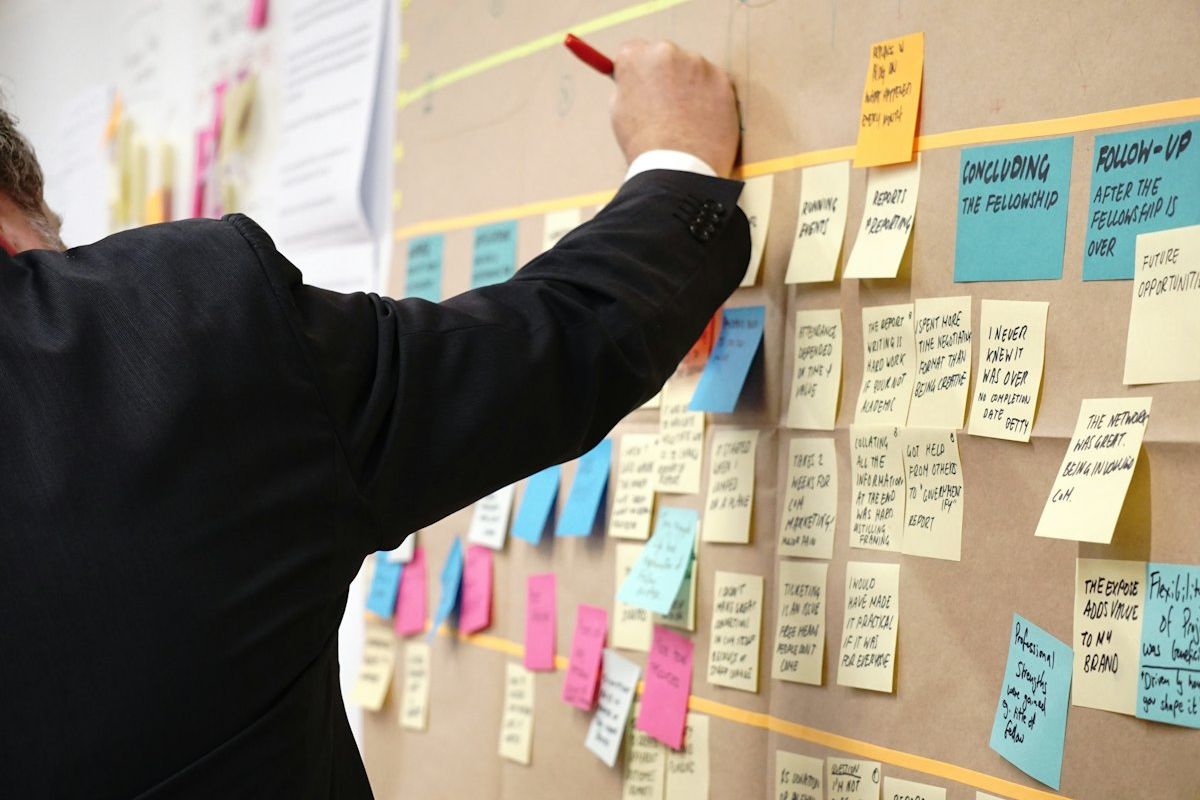 Customer Relationship Strategy
Journey mapping, segmentation, engagement, loyalty and lifecycle marketing as one connected practice that raises retention and lifetime value.
Explore Customer Strategy
Customer Relationship Strategy
Journey mapping, segmentation, engagement, loyalty and lifecycle marketing as one connected practice that raises retention and lifetime value.
Explore Customer Strategy
Let’s build what happens next.
Tell us what you’re building. We’ll answer straight.
Three ways to start
Every engagement starts with a written scope and a quote agreed before work begins.
Choose one of the three ways above