Capability 07 · Five practices, one relationship
Acquisition buys a customer. The relationship is what you keep.
Customer Relationship Strategy runs journey mapping, customer segmentation and insights, engagement programmes, loyalty strategy and lifecycle marketing as one practice. They are sold, built and measured together, because a journey map nobody acts on and a loyalty scheme nobody communicates change nothing on their own.
At-risk customers: adoption falls to 58 and win-back holds 22; adoption and win-back programmes are the priority.
Illustrative figures: share of each segment still active at each stage.
One capability · five practices
Five parts of one customer practice
Read this as one capability with five sections. Each is a discipline in its own right; none of them works alone, which is why we do not sell them apart.
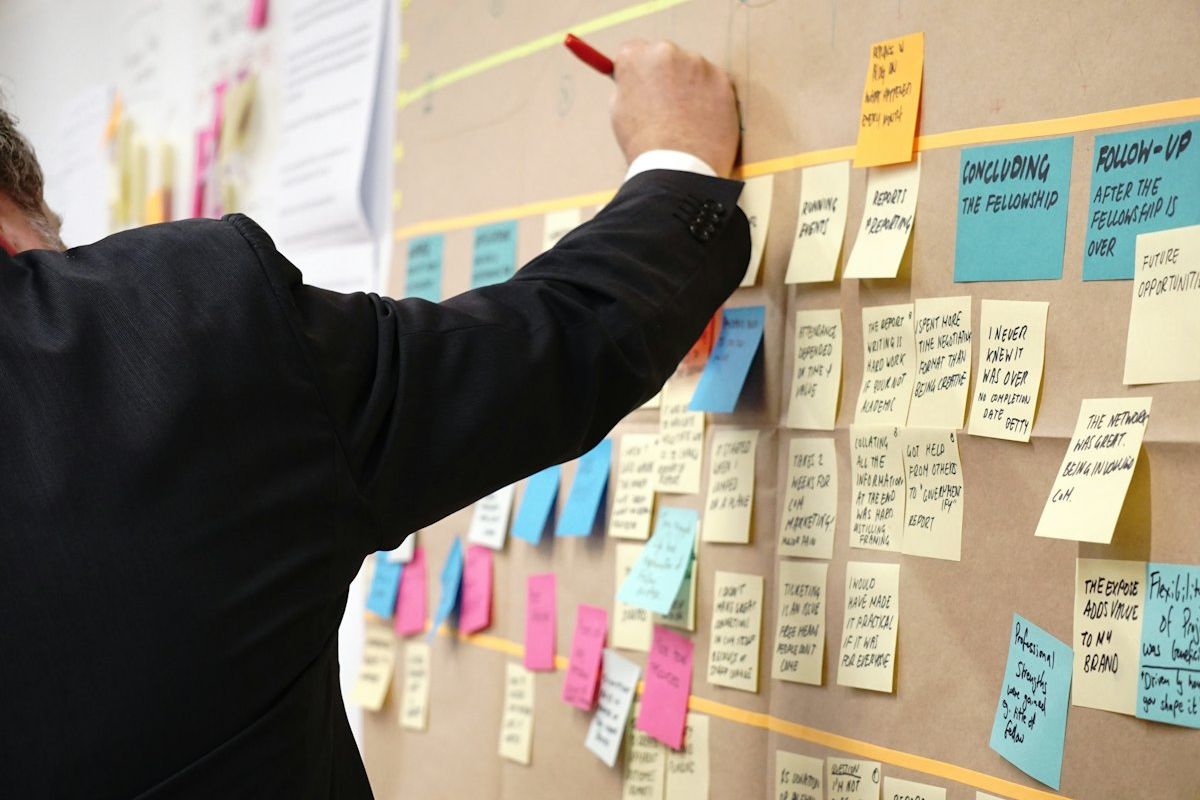
Map the journey customers actually take.
Journeys mapped as customers actually experience them, across channels and into service: the moments of truth, the drop-offs, the recovery points, and the instrumentation that keeps the map honest.
- Moments of truth, drop-offs and recovery points, across channels and into service
- Research and behavioural data reconciled on one map, per segment
- Instrumentation so each step is measured, not remembered
Produces Journey maps by segment
| Moment | Customer goal | Pain today | Owner |
|---|---|---|---|
| Day 0 · sign-up | Get started quickly | Three emails in an hour (gap) | Lifecycle |
| Day 7 · first value | See a result | No guidance (needs attention) | Product |
| Day 30 · first bill | Understand the charge | Invoice unclear (needs attention) | Finance |
One segment definition every team uses.
Needs-based and behavioural segmentation built from research and your own data, with value tiers, propensity and churn models, and one segment definition every team uses.
- Needs-based and behavioural segments, sized and named
- Value tiers, propensity and churn models with model cards
- Segments live in the CRM and the warehouse, not only in a deck
Produces Segmentation model & definitions
| Segment | Rule | Size | Refresh |
|---|---|---|---|
| New and active | Joined < 30 d, ≥ 3 sessions | 12% | Daily |
| At risk | Usage down 40% over 4 weeks | 8% (needs attention) | Daily |
| Loyal | ≥ 4 orders, 12 months | 21% (on track) | Weekly |
Always-on, and never too often.
Always-on programmes for onboarding, adoption, service moments, community and win-back, with a contact strategy per segment and pressure rules across the whole estate.
- Onboarding, adoption, service moments, community and win-back
- A contact strategy per segment, with channel and frequency rules
- Pressure rules across the whole estate, not per team
Produces Contact strategy & programme designs
| Segment | SMS / WhatsApp | Quiet hours | |
|---|---|---|---|
| New and active | 3 (on track) | 1 (on track) | 21:00–09:00 |
| At risk | 2 (on track) | 1 (on track) | 21:00–09:00 |
| Opted out of marketing | 0 (gap) | 0 (gap) | Service messages only |
Loyalty that earns its cost.
Loyalty designed on the value customers want, not only on discount: earn and redeem mechanics, tiers, benefits and partners, modelled for margin, breakage and accounting liability before launch.
- Earn and redeem mechanics, tiers, benefits and partners
- Recognition, access and service levels weighed against discount
- Margin, breakage and accounting liability modelled before launch
Produces Loyalty design & economic model
| Tier | Reward cost | Extra margin | Holds up? |
|---|---|---|---|
| Silver | ₹ 240 | ₹ 610 | Yes (on track) |
| Gold | ₹ 900 | ₹ 1,450 | Yes (on track) |
| Platinum | ₹ 3,200 | ₹ 2,700 | No · redesign (gap) |
Every stage has an owner.
The full calendar of triggered and planned communication by lifecycle stage, from first purchase to renewal, each with an owner, a measure and a holdout group.
- A calendar of triggered and planned contact from first purchase to renewal
- An owner, a measure and a holdout group per stage
- A quarterly rhythm that keeps the five practices in step
Produces Lifecycle calendar & retention dashboard
| Trigger | Action | Holdout | Status |
|---|---|---|---|
| Usage drop 40% | Check-in from success team | 10% | Live (on track) |
| Renewal in 30 days | Value summary email | 10% | Live (on track) |
| Third order | Loyalty invitation | 5% | Draft (needs attention) |
The thread through all five
One customer record, one set of measures.
Lifetime value, retention cohorts, churn and satisfaction measured against one customer record, with a quarterly operating rhythm that keeps the five parts in step.
Where it sits in the engine
Five practices, in the order a customer meets them.
Each practice hands the next a sharper definition of who the customer is and what they need.
- 01 · Map Journeys How customers actually move, across channels and into service.
- 02 · Segment Insight Needs, value and churn risk, one definition for every team.
- 03 · Engage Programmes Always-on contact per segment, with pressure rules.
- 04 · Reward Loyalty Mechanics modelled for margin and liability before launch.
- 05 · Run Lifecycle A calendar by stage, each with an owner and a holdout.
How it runs · 4 stages
Understand, define, design, then run it
Research and data run together from the first week, so the segments people describe and the segments the data shows are reconciled rather than argued about. Timings are typical, not promised.
Stage 01 of 4Wk 01–04
Understand
Customer interviews, service and sales conversations, transaction and behavioural data, and the moments where customers leave. Research and analysis in parallel.
Produces
- Customer research
- Data & churn analysis
- Current journey map
Stage 02 of 4Wk 04–07
Define
Segments built, sized and named, journeys mapped per segment, value and churn models fitted, and the measures that will be reported agreed with leadership.
Produces
- Segmentation model
- Journey maps
- Value & churn models
Stage 03 of 4Wk 06–11
Design
Engagement programmes, loyalty mechanics and the lifecycle calendar designed together, tested against margin and capacity, and prioritised into a release order.
Produces
- Contact strategy
- Loyalty design & economics
- Lifecycle calendar
Stage 04 of 4Wk 11–12
Run
The first programmes launched with holdouts, an owner per stage, and a quarterly review of retention, lifetime value and programme cost.
Produces
- Live programmes
- Retention dashboard
- Quarterly operating rhythm
What you own
A relationship plan, wired into your CRM.
Journey maps, segment definitions, contact rules, the loyalty model and lifecycle triggers, documented and configured in your own systems.

| # | Deliverable | Format |
|---|---|---|
| 01 | Customer journey maps by segment | Figma · PDF |
| 02 | Segmentation model & definitions | Model · sheet |
| 03 | Propensity, churn & lifetime value models | Model · model card |
| 04 | Contact strategy & pressure rules | Doc · config |
| 05 | Engagement programme designs | Blueprints |
| 06 | Loyalty programme design & economic model | Design · model |
| 07 | Lifecycle calendar with triggers & owners | Board · sheet |
| 08 | Retention & lifetime value dashboard | Dashboard |
What changes
Customers who stay longer. Measured, not assumed.
Relationship strategy succeeds when retention and lifetime value rise against a holdout and contact pressure stays within the rules. They are aims, not guarantees.
-
01
One view of the customer
Research, data, journeys and programmes describe the same customer, so teams stop optimising against different definitions.
-
02
Retention treated as a programme
Named owners, a calendar and a measure per stage, instead of a win-back email sent when the quarter looks thin.
-
03
Loyalty that earns its cost
Mechanics modelled for margin, breakage and liability before launch, so the programme is defensible to finance as well as to marketing.
Share of a cohort still active by month, with programme vs holdout. Shape only. Retention is read by cohort, month by month, against a holdout that received none of the programmes.
Technologies we work with
One customer record. Every tool reading from it.
CRM, analytics, warehouse and research tools we use to design and run relationship programmes. Named as technologies we work with, not partnerships; model providers run inside an approval step, never around it.
- HubSpot
- Zoho
- Google Analytics
- Mixpanel
- PostHog
- Snowflake
- Google BigQuery
- Looker
- Python
- Miro
- Salesforce
- Twilio
- dbt
Frameworks we build to
Relationships built on consent. Not on data collected by default.
Frameworks each programme is designed against. Frameworks we build to, not certifications we hold.
-
GDPR — General Data Protection Regulation (EU) 2016/679
General Data Protection Regulation (EU) 2016/679
Consent captured per purpose and channel, tracking tags fired only after consent (Consent Mode v2 where Google is used), and erasure requests reaching every connected tool.
-
DPDP Act 2023 — Digital Personal Data Protection Act, 2023
Digital Personal Data Protection Act, 2023
Notices and consent records for India-based customers, with withdrawal honoured in every journey and channel within the same working day.
-
ISO/IEC 27701 — Privacy information management systems
Privacy information management systems
Every marketing tool that holds personal data listed with its purpose, retention and processor terms, and kept current as tools are added.
-
WCAG 2.2 AA — Web Content Accessibility Guidelines
Web Content Accessibility Guidelines
Emails, landing pages and in-app messages checked for contrast, alt text, reading order and keyboard use before they are approved for send.
-
NIST AI RMF 1.0 — AI Risk Management Framework
AI Risk Management Framework
Each model that scores, targets or writes is inventoried with an owner, a measured error rate and a threshold that stops it.
Services & packages
Keeping a customer is a programme, not a campaign.
Journey mapping, customer segmentation and insights, engagement programmes, loyalty strategy and lifecycle marketing, run as one practice by one team. Start with the part you need most; each one is designed to connect to the others, and all of them are measured on retention and lifetime value.
- Categories
- 05
- Services
- 19
- Packages
- 05
How to buy
- 01Pick services. Enquire about one, or add several to a brief.
- 02Choose how to engage. A sprint, a fixed project or an ongoing team.
- 03Send the brief. We reply within one working day.
Start a project
Ways to engage. Same team, same standard.
Three ways in, from a two-minute question to a formal RFQ. Each is read in full by the lead for the work, and anything already in your brief goes with it.
Or book a thirty-minute call-
01
For a first conversation, a press request, or anything that does not need a scope yet.
You get A reply from a lead, not a sales queue
-
02Most useful
Goals, audiences, a budget band and timing. Enough for us to come back with a shape, not only questions.
You get Options and a first scope after one call
-
03
Your pack, your deadlines, and the procurement and security rules the work must meet.
You get Receipt confirmed and a named bid lead



How it is priced
Each package shows how it is priced. Every engagement starts with a written scope and a quote agreed before work begins.
Opens a project brief with this package chosen.
-
In your brief
- Typical length
- 1–3 weeks
- Pricing
- Fixed fee
-
In your brief
- Typical length
- 4–12 weeks
- Pricing
- Fixed price
-
In your brief
- Typical length
- 3–9 months
- Pricing
- Fixed price per milestone
-
In your brief
- Typical length
- Ongoing · 6-month minimum
- Pricing
- Monthly fee
-
In your brief
- Typical length
- 6–18 months
- Pricing
- Programme fee · by statement of work
Compare what each package includes
| Package | Every engagement includes | Best for |
|---|---|---|
| SprintOne fixed question, answered in one to three weeks. |
|
Discovery, a diagnostic, a prototype or a decision you need to make soon |
| ProjectA defined scope, delivered for a fixed price. |
|
Work you can describe up front: an identity, a system, a set of tools |
| MilestoneA larger build, split into gated phases you approve and pay for one at a time. |
|
Programmes too big to fix in one contract, and teams that want control at each step |
| RetainerReserved monthly capacity to run, improve and extend what we built. |
|
Brands and products after launch that need a steady team without hiring one |
| EnterpriseA multi-workstream programme with governance, a dedicated team and SLAs. |
|
Large organisations running change across markets, portfolios or business units |
Questions
What teams ask about customer strategy.
Anything else, ask us directly. A short call is usually quicker than a long email.
01Is this one service or five?
One. Journey mapping, segmentation and insights, engagement programmes, loyalty and lifecycle marketing are the five parts of a single practice, delivered by one team on one plan. You can start with one part — most clients start with journeys and segmentation — but they are designed to connect, and we will always say where the next part is needed.
02Do we need a points programme to have loyalty?
No. Points are one mechanic among many, and often the most expensive. Recognition, access, service levels, community and useful benefits frequently retain better at lower cost. We model several mechanics against your margin before recommending one.
03How long before retention moves?
Early programmes such as onboarding and win-back can show measurable effect within one or two purchase cycles. Segmentation and loyalty changes compound over several quarters, so we set cohort-based measures rather than a monthly number that will mislead you.
04How do you prove any of it worked?
With holdout groups on every programme, cohort retention curves, and lifetime value measured against a pre-programme baseline. Programmes that cannot show incremental effect are changed or stopped.
05What data do you need to start?
Consented first-party data: transactions, contact history, service interactions and any research you already have. Where the data is thin we start with research and a simple value-based segmentation, and the model improves as the data accumulates.
Works best with
A strategy needs engines to run it. These are the two.
Automation runs the lifecycle journeys; Campaign AI measures what each programme adds.


Let’s build what happens next.
Tell us what you’re building. We’ll answer straight.
Three ways to start
Every engagement starts with a written scope and a quote agreed before work begins.
Choose one of the three ways above