
Consumer & retail

Fashion & apparel. Fit decides the return.

Every claim about the cloth now needs its proof on the page.

Apparel, footwear and accessory brands, D2C labels and the marketplaces they sell through, where sizing, returns and sustainability claims decide the margin. We build the product data, size and fit journeys, claim-checked content and storefronts that sell in India and the EU without saying more than the evidence allows.

The number we move
Return rate on online orders
Where we work in fashion & apparel
  • Apparel brands
  • Footwear
  • Accessories
  • D2C labels & marketplaces
  • Ethnic & occasion wear
  • Textiles & sourcing
Rules mapped
8 rules · 3 areas
Disciplines that lead
CampaignProduct
Frameworks we build to
DPDP Act 2023 — Digital Personal Data Protection Act, 2023WCAG 2.2 AA — Web Content Accessibility GuidelinesCore Web Vitals — Loading, interactivity and visual stabilityGDPR — General Data Protection Regulation (EU) 2016/679PCI DSS v4.0.1 — Payment Card Industry Data Security Standard
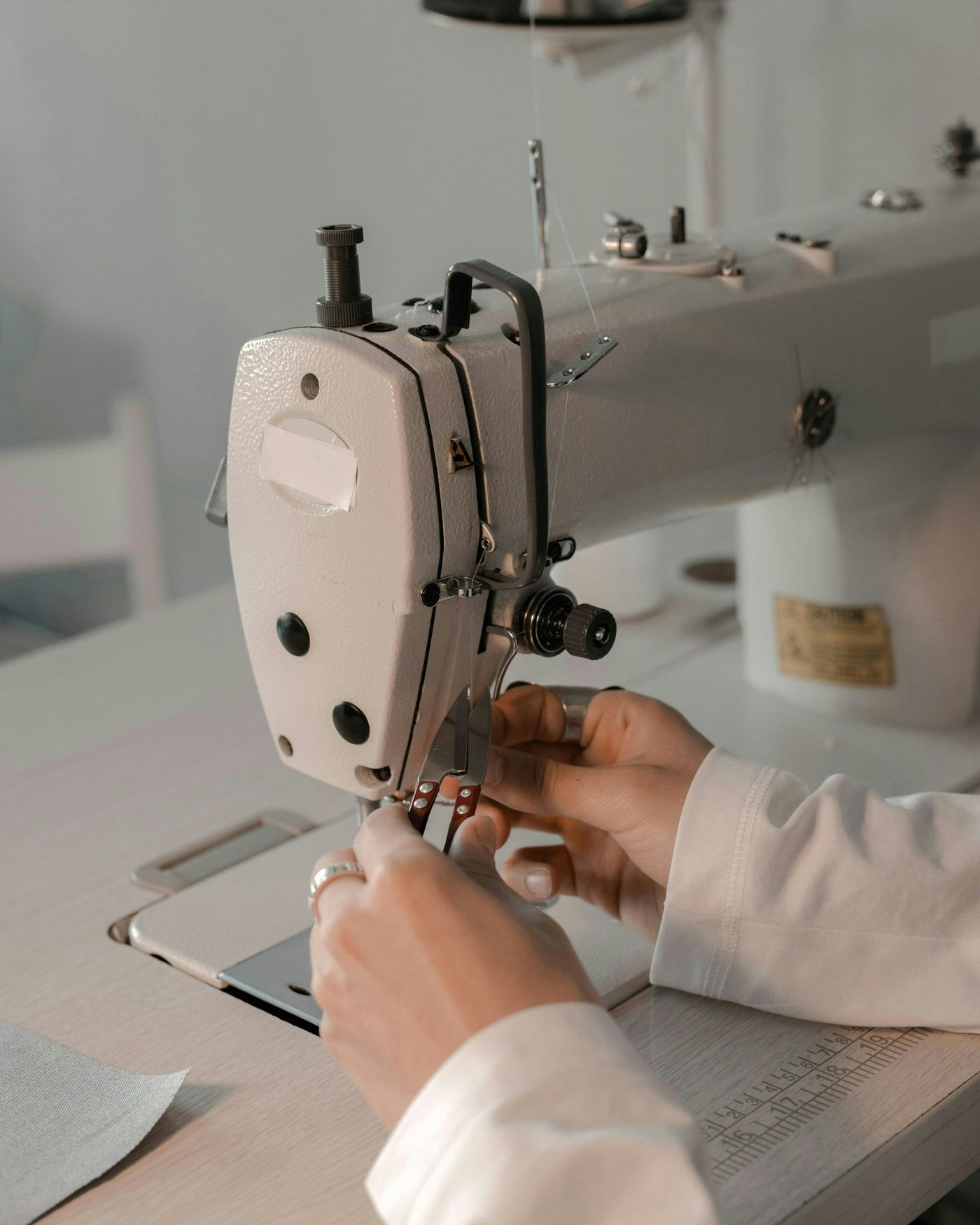
A person’s hands guide fabric under the needle of a white industrial sewing machine
Fashion & apparelFit is decided at the needle, long before the size chart.

Where the rules biteMap of all forty-one industries

  • Claims Advertising & claims: Shapes most of the work
  • Regulator Sector regulator: Shapes most of the work
  • Payments Payments: Sometimes shapes the work
  • Data Personal data: Often shapes the work
  • Security Security & incidents: Sometimes shapes the work
  • Access Accessibility: Often shapes the work
  • AI AI governance: Sometimes shapes the work

What is shifting

The label grew a passport, and the green claim now needs proof.

Unsold stock can no longer be destroyed in the EU, generic eco claims are banned there, and India’s regulator has named both greenwashing and dark patterns. Each shift names what it demands, with a fact you can check.

Rolled lengths of knitted fabric stacked by colour: mustard, mauve, plum, red and grey
Every fibre on the label is now a claim someone can check.
  1. Unsold stock stopped being a write-off and became a compliance question.

    It demandsDemand planning, resale and repair journeys that give unsold pieces a second route to a buyer.

    SignalArticle 25 of the EU Ecodesign Regulation (EU) 2024/1781 bars large companies from destroying unsold apparel, clothing accessories and footwear from 19 July 2026.

  2. Green words became regulated words in India and in the EU.

    It demandsEnvironmental claims that are specific, evidenced and qualified on the page where they appear.

    SignalSince 27 September 2026, Directive (EU) 2024/825 bans generic claims such as “eco-friendly” in the EU unless recognised excellent environmental performance is shown.

  3. Checkout design is now enforced like advertising.

    It demandsPrices, delivery charges and urgency messages that are honest from the first screen.

    SignalThe CCPA’s 2023 guidelines name thirteen dark patterns, from false urgency to drip pricing, and in June 2025 it asked e-commerce platforms to self-audit within three months.

  4. Shoppers decide from a listing, so the listing has to carry the whole product.

    It demandsSize, fit, fabric and origin information complete enough to choose the right item first time.

    SignalIndia’s E-Commerce Rules, 2020 require marketplace sellers to show the details a buyer needs before purchase, including the total price and the country of origin.

The rulebook

Every listing is a declaration, every green word a claim.

India’s e-commerce, packaging and advertising rules, and the EU laws on green claims and unsold goods, read for a brand that sells in both. Your legal and sustainability teams keep sign-off.

Frameworks we build to

  • DPDP Act 2023 — Digital Personal Data Protection Act, 2023
  • WCAG 2.2 AA — Web Content Accessibility Guidelines
  • Core Web Vitals — Loading, interactivity and visual stability
  • GDPR — General Data Protection Regulation (EU) 2016/679
  • PCI DSS v4.0.1 — Payment Card Industry Data Security Standard

Frameworks we design and build to — not a claim of certification.

Advertising & claims

Shapes most of the work

  1. Central Consumer Protection Authority

    CCPA greenwashing guidelines, 2024

    Generic terms such as green, eco-friendly, natural, organic and sustainable need accurate, accessible qualifiers and substantiation; every environmental claim needs verifiable evidence, which can be disclosed through a QR code or link.

    We designEach claim on a tag, page or post links to its evidence, or it does not run.

    CCPA · Guidelines for Prevention and Regulation of Greenwashing or Misleading Environmental Claims, 15 October 2024 Official text: CCPA greenwashing guidelines, 2024

  2. Central Consumer Protection Authority

    CCPA dark-patterns guidelines, 2023

    Thirteen named practices, including false urgency, basket sneaking, drip pricing and confirm shaming, are unfair trade practices; platforms were advised on 5 June 2025 to self-audit within three months.

    We designSale banners, stock counters and checkout steps are tested against all thirteen before a season goes live.

    CCPA · Guidelines for Prevention and Regulation of Dark Patterns, 30 November 2023 · advisory of 5 June 2025 Official text: CCPA dark-patterns guidelines, 2023

  3. Advertising Standards Council of India

    ASCI guidelines for influencer advertising

    Any material connection between a brand and a creator — payment, free products, discounts, trips — is disclosed clearly on the post; the guidelines also cover virtual influencers.

    We designCreator briefs carry the disclosure label and the approved claims, and every post is checked before it goes live.

    ASCI · Guidelines for Influencer Advertising in Digital Media Official text: ASCI guidelines for influencer advertising

  4. European Union

    EU directive on empowering consumers for the green transition

    From 27 September 2026, generic environmental claims are banned unless recognised excellent environmental performance is shown, and sustainability labels must come from a certification scheme or a public authority.

    We designClaims become specific statements with their evidence linked; uncertified badges come off the tag and the page.

    Directive (EU) 2024/825 · applies from 27 September 2026 Official text: EU directive on empowering consumers for the green transition

Sector regulator

Shapes most of the work

  1. Department of Consumer Affairs

    Consumer Protection (E-Commerce) Rules, 2020

    Marketplace sellers show the total price with its breakup, return and refund terms, importer details and the country of origin; grievances are acknowledged within 48 hours and resolved within a month.

    We designProduct templates hold every required field, so a listing cannot publish half-complete.

    Consumer Protection (E-Commerce) Rules, 2020 · G.S.R. 462(E), 23 July 2020 · rules 4(5) and 6(5) Official text: Consumer Protection (E-Commerce) Rules, 2020

  2. Department of Consumer Affairs

    Legal Metrology (Packaged Commodities) Rules, 2011

    Pre-packed goods declare the retail sale price, net quantity, maker or importer and consumer-care details, and online listings must show them; from 1 July 2027, imported products need a searchable, sortable country-of-origin filter.

    We designDeclarations live in the product record, so the swing tag, the pack and every listing say the same thing.

    LMPC Rules, 2011 · rule 6(10); rule 6(10A) inserted by G.S.R. 312(E), 27 April 2026

  3. European Union

    EU Ecodesign for Sustainable Products Regulation

    Large companies may not destroy unsold apparel, clothing accessories or footwear from 19 July 2026, medium-sized ones from 19 July 2030; textiles are a priority group for ecodesign rules and the digital product passport.

    We designProduct records are structured now for passport data, and unsold stock gets resale, repair or donation routes.

    Regulation (EU) 2024/1781 · Article 25 and Annex VII Official text: EU Ecodesign for Sustainable Products Regulation

Personal data

Often shapes the work

  1. Ministry of Electronics and IT

    DPDP Act, 2023 and DPDP Rules, 2025

    Consent for each purpose in loyalty, style quizzes and fit profiles, withdrawal as easy as consent, and breach reporting to the Data Protection Board.

    We designFit profiles ask only for what improves the suggestion, with consent logged per purpose.

    DPDP Act, 2023 · DPDP Rules, 2025 (core obligations from 13 May 2027) Official text: DPDP Act, 2023 and DPDP Rules, 2025

Compiled 3 October 2026. Our reading of typical programmes, not legal advice. Rules change; your counsel confirms how each one applies to you.

Challenges

Where fashion & apparel loses customers and time.

What comes up first in most fashion & apparel conversations — outside, at the screen, and inside, in the operation.

Your customers

  1. The right size, first time

    Fit guidance that matches how each brand actually cuts, so the first order is the one that is kept.

  2. Claims they can believe

    “Organic”, “recycled” and “sustainable” backed by evidence a shopper can open.

  3. Easy returns and exchanges

    Clear return windows, exchange-first journeys and refunds that arrive when promised.

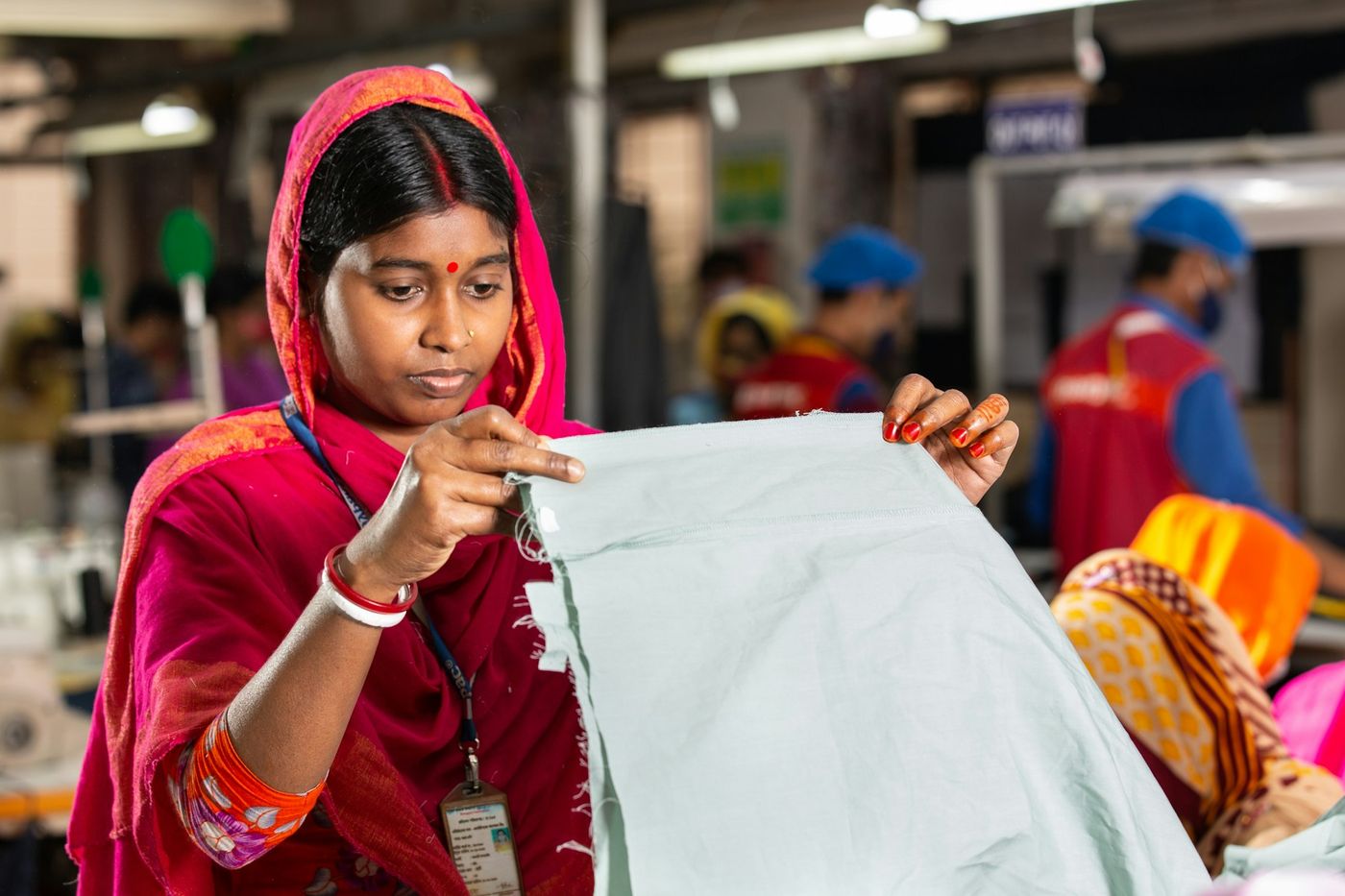
A garment worker holds up a pale green cut panel to inspect it, with sewing lines and colleagues behind her
Quality is still checked by hand, panel by panel.

Your operation

  1. Thousands of SKUs every season

    Every colourway and size needs complete, consistent data on each marketplace and on your own store.

  2. Proof from deep supply chains

    Fibre, origin and certification evidence sits with suppliers several tiers away.

  3. Returns that eat the margin

    Every avoidable return costs shipping twice, handling and often the sale itself.

What we build

The disciplines behind a typical fashion & apparel programme.

A typical programme here draws on each discipline in this mix. Every line names what it builds for the industry and links to the capability that does the work.

Leads Core Supports Share of a typical programme, by role · illustrative
  1. Season launches, lookbooks and creator programmes with every claim checked before it runs.

  2. Size and fit journeys, product pages and returns flows designed around your own return reasons.

  3. 03

    Brand Design

    Core

    Brand and label systems that stay recognisable from the swing tag to a marketplace thumbnail.

  4. Fast storefronts, one product record feeding every marketplace, and structured data AI assistants can read.

  5. 05

    AI Design

    Core

    Product copy and imagery generated from the product record, with a claims check on every draft.

  6. Consented CRM, back-in-stock alerts and size-aware recommendations on one customer record.

Programmes

Fix the product page first, then the season around it.

The way in reads your listings, size journeys and claims against the rules and your return data, and ranks the fixes by returns and by risk. Lengths are typical, never promised.

The way in

Product page, fit and claims audit

We read a sample of listings, size journeys and green claims against the rules and your return reasons, then rank the fixes by returns and by risk.

Package
Sprint · Fixed fee
Typical length
2–3 weeks
It sets
Return rate on online orders, as a baseline
  • Product experience audit
  • Brand audit & diagnostic

What it hands over

  • A listing gap register against the e-commerce and packaging rules
  • A claims register marked keep, qualify or remove
  • A fit-guidance plan built from your return data

Start here
  1. 02Project · 8–12 weeks

    Size and fit experience

    Size guidance, fit notes and product pages redesigned around how each category is cut, and tested with real shoppers.

    MovesSize-related returns

    Services: End-to-end UX & UI design · User research & usability testing · Website

    Enquire about Size and fit experience
  2. 03Project · 8–12 weeks

    Product record and marketplace syndication

    One product record holding fabric, origin, care and claims, feeding your store, every marketplace and the AI assistants shoppers ask.

    MovesListing completeness across marketplaces

    Services: Content model & headless CMS · System integration · AI search visibility (AEO & GEO)

    Enquire about Product record and marketplace syndication
  3. 04Retainer · Ongoing

    Season content with AI and a claims check

    Lookbooks, listings and creator content produced from approved claims and brand rules, with a person approving every asset.

    MovesShare of assets approved first time

    Services: AI content studio set-up · Content production retainer · Brand check

    Enquire about Season content with AI and a claims check

How success is measured

The number we moveReturn rate on online orders

  • Return rate on online orders
  • Size-related returns
  • Listing completeness across marketplaces
  • Share of environmental claims with evidence on file

AI, under the rules

AI writes from the product record, and never invents a fibre.

Each use case has an owner, an evaluation set and a log; nothing about a product’s material or origin is published that the record cannot prove.

Use case 01

Listing copy from the product record

Measured byListings approved without edits

Tested forOWASP LLM09 · Misinformation

agent / listing-copy-from-the-product-record Guarded
  1. TaskDrafts titles, descriptions and care notes from the approved product record.
  2. GuardrailWrites no material, origin or sustainability claim the record does not hold; restricted green words are blocked.
  3. HumanA merchandiser approves every listing before it publishes.
  4. LogEach listing stores the record version and the claim IDs it used.

Ships only with its evaluation set, its guardrail and an owner

Use case 02

Fit assistant

Measured bySize-related returns on assisted orders

Tested forOWASP LLM02 · Sensitive information disclosure

agent / fit-assistant Guarded
  1. TaskSuggests a size from the shopper’s answers, the garment’s measurements and anonymised return reasons.
  2. GuardrailAsks only for what improves the suggestion and never infers body data the shopper did not give.
  3. HumanThe e-commerce team reviews fit outcomes and flagged conversations every week.
  4. LogQuestions asked, size suggested and whether it was kept, without personal identifiers.

Ships only with its evaluation set, its guardrail and an owner

Use case 03

Colourway and background variants

Measured byColour-related returns on generated imagery

Tested forOWASP LLM05 · Improper output handling

agent / colourway-and-background-variants Guarded
  1. TaskProduces colourway and background variants of approved product photography.
  2. GuardrailNever alters fit, drape or colour beyond the approved swatch; synthetic models are labelled wherever they could mislead.
  3. HumanA brand reviewer approves every image against the physical sample.
  4. LogSource photograph, prompt, model version and reviewer.

Ships only with its evaluation set, its guardrail and an owner

Work and insights

Programmes in fashion & apparel.

Anonymised projects from this industry, and what we have written about it. No client is named without written approval.

All work in fashion & apparel

A typical programme · composite

A D2C apparel label rebuilt its size guidance from its own return reasons and moved every fabric, origin and sustainability claim into one product record, so its store, its marketplaces and its campaigns publish only what the record can prove.

Anonymised and illustrative: the shape a programme takes, never a named client.

Questions

What e-commerce, brand and sourcing leads ask us first.

Something else on your mind? Ask us directly

Q.01Do you work with marketplaces as well as brands?

Yes: brands selling direct and through marketplaces, and the marketplaces themselves. The work differs — a brand owns its product record, a marketplace owns the rules every seller’s listing must meet — and so do the duties under the E-Commerce Rules.

Q.02Can you tell us whether our sustainability claims are allowed?

We map every claim to its evidence and to the rules in each market — the CCPA’s greenwashing guidelines in India, the 2024 green-transition directive in the EU — and prepare what your legal and sustainability teams need to decide. The judgement and the sign-off stay with them.

Q.03Will AI-generated imagery push our returns up?

It can, if generated images flatter fit or colour. We generate only variants of approved photography, check colour against the physical swatch, keep a person approving every image, and watch colour- and fit-related returns afterwards.

Q.04Should we prepare for the EU digital product passport now?

If you sell textiles in the EU, structuring your product record for fibre, origin, care and repair data now turns the passport into a publishing step later. The detailed textile requirements arrive by delegated act, so we design the record to absorb them.

Let’s build what happens next.

Tell us what you’re building. We’ll answer straight.

Book a discovery call

Three ways to start

  1. 01About 2 minutes

    A quick question

    You get A reply from a lead, not a sales queue

  2. 02About 8 minutesMost useful

    A project brief

    You get Options and a first scope after one call

  3. 03About 15 minutes

    A formal RFQ or RFP

    You get Receipt confirmed and a named bid lead

Every engagement starts with a written scope and a quote agreed before work begins. How each package is priced