
Variant A
Pass · 0.91- Colour
- Clear space
- Tone
- Rights
~/brand-design capability 06 of 6 · Brand Design
We tune image and language models on your brand and build the brand check, templates and copy assistant your team uses. Agents make and check every variant; a named person approves what goes live.
Illustration: a six-stage brand content pipeline (training set, tuned model, generation, automated brand check, review by a brand lead and publish) with job counts and a live run log.
$ brandctl --help what we offer · six tools
All six use the same palette, type, voice and approval rules, so images, copy and every format follow one standard.
USAGE brandctl <command> [flags]
COMMANDS
↑↓ select a command
brandctl tune --image --language --from ./brand-system
Image and language models fine-tuned on your identity, so first drafts start on brand.
People decideWhich references the model may learn from, and whether a version is released.
brandctl check <asset> --rules palette,clearspace,type,tone --fix
Checks every asset for palette, logo clear space, type and tone, flags what is off and suggests a fix.
People decideWhether a flagged fix is accepted, or the asset goes back.
brandctl generate --source approved/0409 --markets all --formats 6
Campaign variants, market versions and formats produced from one approved source.
People decideThe source, approved before any variant is made.
brandctl write --voice your-brand --lexicon --never-say
Writing help that follows your voice, approved terms and banned words, inside the tools your team already writes in.
People decideTone calls the assistant cannot make: humour, risk, apology.
brandctl render --template retail-offer --data markets.csv
Templates that turn content and data into finished assets for every market, size and channel.
People decideWhich templates exist, and what content is allowed in each slot.
brandctl govern --policy high-stakes-review --log
Written rules for what the tools may produce and what needs a person, with a record of every output.
People decideWhat counts as high-stakes, and who approves it.
Illustrative run
$ brandctl curate ./references phase 01 · Prepare · Wk 01–02
Before tuning, an agent sorts, labels and rights-checks every reference and suggests a verdict. Each decision is recorded with the name of the person who made it.




$ brandctl run --watch how we use AI
Pick a product, market, format and mood. The tuned model makes four variants with your identity locked, the brand check scores them and passing work waits for your approval.
Interactive demo. Choose a product, market, format and mood, then press Generate. Four variants are scored for colour, clear space, tone and rights; variants that pass wait for your approval; approving one publishes it to six formats in nine markets.
Only variants that pass the check reach a person. Failures go back with the reason attached.
Variant B approved by Brand lead · published to 6 formats × 9 markets · credentials signed
$ brandctl test ./rules rule tests · every version
When a test fails, you see what broke, what changed to fix it and who approved the fix. The same tests run again on every new model version.
describe palette
uses palette v7 tokens only · ΔE ≤ 2.012ms
keeps text contrast at AA or above9ms
describe logo
keeps clear space ≥ 1× mark height14ms
never recolours or stretches the lockup8ms
describe voice
expected headline contains 0 never-say terms
received “A revolutionary way to start the day” · 1 term
- prompt-set v3.0 · lexicon: 41 never-say terms
+ prompt-set v3.1 · lexicon: 42 never-say terms (+ revolutionary)
+ copy assistant regenerated · eval re-run 0.91
Fix Term added to the lexicon, the copy assistant regenerated and the suite run again. Signed off by the Copy lead.
reads at tone score ≥ 0.8033ms
describe rights
uses only references with cleared rights11ms
blocks the likeness of a real person17ms
describe review
sends regulated claims to a person6ms
sends pricing and apologies to a person6ms
describe log
records who, what, when and model version4ms
$ brandctl eval --gate release release gate
Each tuned model is scored on a fixed evaluation set built from your brand. A version that meets every score can still be held back by the brand lead.
Compare version
Held at the gate
v3.0 missed 6: brand fidelity, palette accuracy, clear space held, tone score, review approval, rights blocked. Not released.
Held at the gate
v4.0 missed 4: brand fidelity, palette accuracy, clear space held, review approval. Not released.
Held at the gate
v4.1 missed 1: tone score. Not released.
Gate passed
v4.2 cleared all 6 gates. Released after sign-off by the Brand lead.
Illustrative Domain 0.50–1.00 · gate marked
0.710.860.910.93
Evaluation set rated against the identity · gate 0.90
0.780.930.970.98
Outputs within ΔE 2.0 of palette v7 · gate 0.95
0.620.950.990.99
Lockups placed inside the rule · gate 0.98
0.660.820.770.86
Copy scored against the voice · gate 0.80
0.410.630.740.79
Share approved at first human review · gate 0.70
0.901.001.001.00
Unclear references stopped before render · gate 1.00
$ brandctl inspect 0409-b content credentials · signed manifest
Each file carries a signed record of its source reference, model version, edits, checks and approver. Open any file to read its history.

Person Automated Illustrative
01 · Capture · a person decided
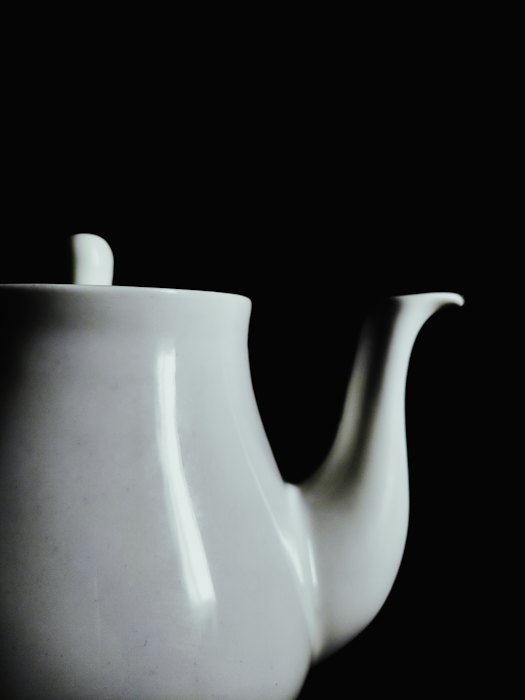
The source still life was shot in your studio. Rights: owned, recorded at capture.
02 · Curate · a person decided
The agent matched it to palette v7 at 0.94 and suggested approval. A person made the call.
03 · Tune · automated, logged
Trained on set v7, scored on the evaluation set and released after sign-off at the gate.
04 · Generate · automated, logged
Produced from an approved source with palette, lockup and clear space locked.
05 · Edit · a person decided
A person tightened the crop and the headline, and the edit is recorded.
06 · Check · automated, logged
All four checks passed on the edited file, so it moved to review.
07 · Approve · a person decided
The release decision sits with a named person, with the note kept in the record.
08 · Publish · automated, logged
Every rendition carries the signed manifest and an AI-generated disclosure.
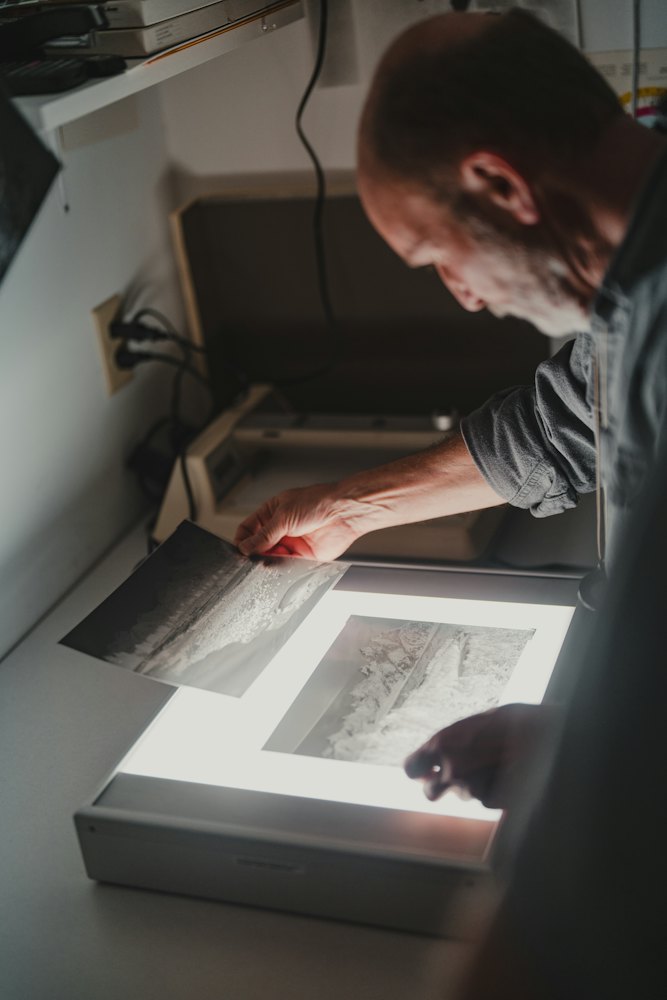
$ brandctl vault ls ownership · You own the model
Who owns the trained model? You do, once it is paid for. Weights, datasets, prompts and logs are delivered into your accounts at handover.
You choose where each part runs: in your cloud or managed for you.
Model weights, datasets, prompts and logs are never used to train anything else. What we make for you is yours once it is paid for. Tools we already had stay ours, and you get a free, permanent licence to use them.
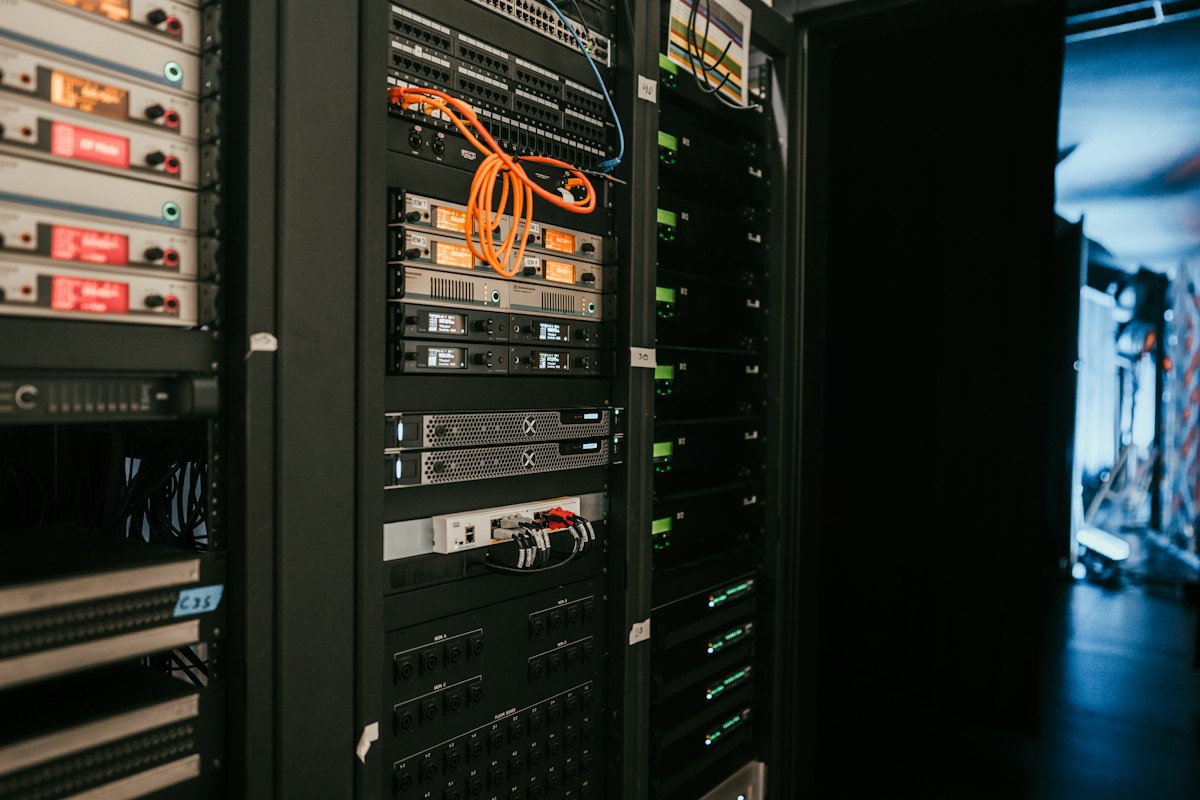
v4.2 · fine-tuned on training set v7 · 4.1 GB
In your cloud account · your keys owned by you
prompt set v3.1 · lexicon v3.1 · 38 MB
In your cloud account · your keys owned by you
v7 · 2,418 references · rights records · 19 GB
In your cloud account · your keys owned by you
11 rule tests · 640 evaluation cases · 210 MB
In your cloud account · your keys owned by you
every output · who, what, when, model · streaming
Run for you · export or delete at any time owned by you
311 rules · plugin and API · 2 MB
Run for you · export or delete at any time owned by you
4 in your cloud · 2 managed for you · 6 of 6 owned by you
$ brandctl deploy --log how it works · 6–10 weeks
We prepare the training set, tune and test the models, build the tools into your workflow, then run a pilot and hand over.
deploy #01 · a41c9e2 queuedrunningsucceeded Wk 01–02
Agents sort, label and rights-check your assets, rules and examples; the brand lead approves the training set.
artefactsTraining setRights checkTool scope
deploy #02 · 7f03bd1 queuedrunningsucceeded Wk 03–05
Models are fine-tuned and scored against your brand and the rules become tests; the brand lead approves each release.
artefactsTuned modelsEvaluation setRule tests
deploy #03 · c58e21a queuedrunningsucceeded Wk 06–08
The brand check, generation and templates are built into your team's tools; the design lead approves templates and locked slots.
artefactsBrand checkGeneration pipelineTemplate engine
deploy #04 · 0e9d6f4 queuedrunningsucceeded Wk 09–10
A pilot team uses the tools, the model is re-tuned on their approved work, and weights, data and logs move to your accounts.
artefactsPilotRe-tuneHandover
$ brandctl registry ls what you get · 7 artefacts
Everything the programme builds goes into a registry you control, with a format, version and named owner for each item. Download any of it without asking us.
Image model fine-tuned on your identity, so generation starts on brand.
Formats:Weightsyours
brandctl pull image-model@4.2.0
Adapter and prompt set that write in your voice and approved terms.
Formats:Weightsprompt set
brandctl pull language-kit@3.1.0
Scores any asset against the rules and returns fixes with reasons.
Formats:PluginAPI
brandctl pull brand-check@2.3.1
Generates variants from approved sources in every format you publish.
Formats:ComfyUIAPI
brandctl pull gen-pipeline@1.8.0
Fills templates with content and keeps layout inside the rules.
Formats:WebAPI
brandctl pull template-engine@1.4.2
Tests and evaluation set every model version must pass before release.
Formats:Tests
brandctl pull guardrails@1.1.0
Who made what, with which model, and who approved it.
Formats:Dashboard
brandctl pull output-log@live
$ brandctl report --outcomes what changes
Each outcome below runs as a job inside your tools after handover, and each job reports its own results.
job/on-brand-by-defaultexit 0
Drafts start from your identity, and the brand check flags anything that is off.
96%pass the check first time
owner · Your brandschedule · continuousIllustrative
job/volume-without-driftexit 0
Formats and market versions come from one approved source, so people review only the judgement calls.
54renditions per approved source
owner · Your brandschedule · continuousIllustrative
job/yours-all-of-itexit 0
Model weights, datasets, prompts and logs are never used to train anything else.
0copies kept by us
owner · Your brandschedule · continuousIllustrative
Services & packages
Start with one service, such as a brand check or a brand-tuned image model, or have us build and run the full set. Models, prompts and logs are yours once paid for.
How to buy
How we work with you
Ask a quick question, send a project brief or issue a formal RFQ. The lead for the work reads each one in full, and any services already in your brief go with it.
Or book a thirty-minute call01
For a first conversation, a press request or anything that does not need a scope yet.
You get A reply from a named lead
02Recommended
Goals, audiences, a budget band and timing, so our first reply can outline the work.
You get Options and a first scope after one call
03
Your documents, deadlines and the procurement and security rules the work must meet.
You get Receipt confirmed and a named bid lead
How it is priced
Each package shows its pricing model. Work starts once a written scope and quote are agreed.
Opens a project brief with this package chosen.
In your brief
In your brief
In your brief
In your brief
In your brief
In your brief
| Package | Every engagement includes | Best for |
|---|---|---|
| SprintA short, fixed-scope engagement that answers one defined question. |
|
Discovery, a diagnostic, a prototype or a decision you need to make soon |
| ProjectA defined scope, delivered for a fixed price. |
|
Work you can describe up front: an identity, a platform or a set of tools |
| MilestoneA larger build in phases you approve and pay for one at a time. |
|
Programmes too large for one contract, where you want control at each step |
| RetainerReserved monthly capacity to run, improve and extend what we built. |
|
Live brands and products that need a steady team without hiring one |
| EnterpriseA multi-workstream programme with a dedicated team, governance and agreed service levels. |
|
Large organisations running change across markets, portfolios or business units |
| SquadA dedicated team that works inside your stack and sprint schedule. |
|
Teams with a clear roadmap that need more senior people quickly |
$ man brandctl questions
Short answers on models, ownership, prerequisites and brand checks. Ask anything else in your brief.
Start a briefNAME
brand-ai-tools — automated brand checks on every asset, before a named person approves it
SYNOPSIS
brandctl [tune | check | generate | write | render | govern] --brand your-brand
We choose a model per task, tested on your own examples. Image work uses Flux, Adobe Firefly and ComfyUI pipelines; language work uses Gemini, OpenAI or Anthropic models. We hold no partner status and switch when test results change.
You do, once it is paid for. Weights, datasets, prompts and logs are delivered into your accounts at handover.
You need a defined identity. If its rules are not written down yet, we start with Brand Systems, because a model can only learn what has been decided.
Three layers: rule tests, an automatic brand check and a person. Tests run on every model version, the check runs on every output, and a named person approves high-stakes work. Every output is logged.
SEE ALSO
$ ls -la ~/brand-design 6 capabilities · 2 pair with this one
Brand AI Tools apply a brand that has already been decided. These capabilities do the deciding; the two marked here supply the rules and identity the models learn.
You will speak to a lead who would run the work, and get a straight answer on fit.
Three ways to start
Every engagement starts with a written scope and a quote agreed before work begins.
Choose one of the three ways above