Consumer & retail

Consumer electronics. Repairability is now part of the spec.

Service, energy and safety rules decide what the box can promise.

Device and appliance makers, electronics retailers and after-sales networks, where a product is judged long after the sale — on updates, repairs and the label on the box. We design the product pages, set-up and service journeys, and the data that keeps certifications, energy labels, repair information and warranties accurate in every market.

The number we move
First-time fix rate in after-sales service
Where we work in consumer electronics
  • Phones & devices
  • Home appliances
  • Audio & wearables
  • Electronics retail
  • After-sales & repair
  • Smart home & IoT
Rules mapped
8 rules · 4 areas
Disciplines that lead
TechnologyProduct
Frameworks we build to
DPDP Act 2023 — Digital Personal Data Protection Act, 2023ISO/IEC 27001:2022 — Information security management systemsOWASP ASVS — Application Security Verification StandardGDPR — General Data Protection Regulation (EU) 2016/679WCAG 2.2 AA — Web Content Accessibility Guidelines
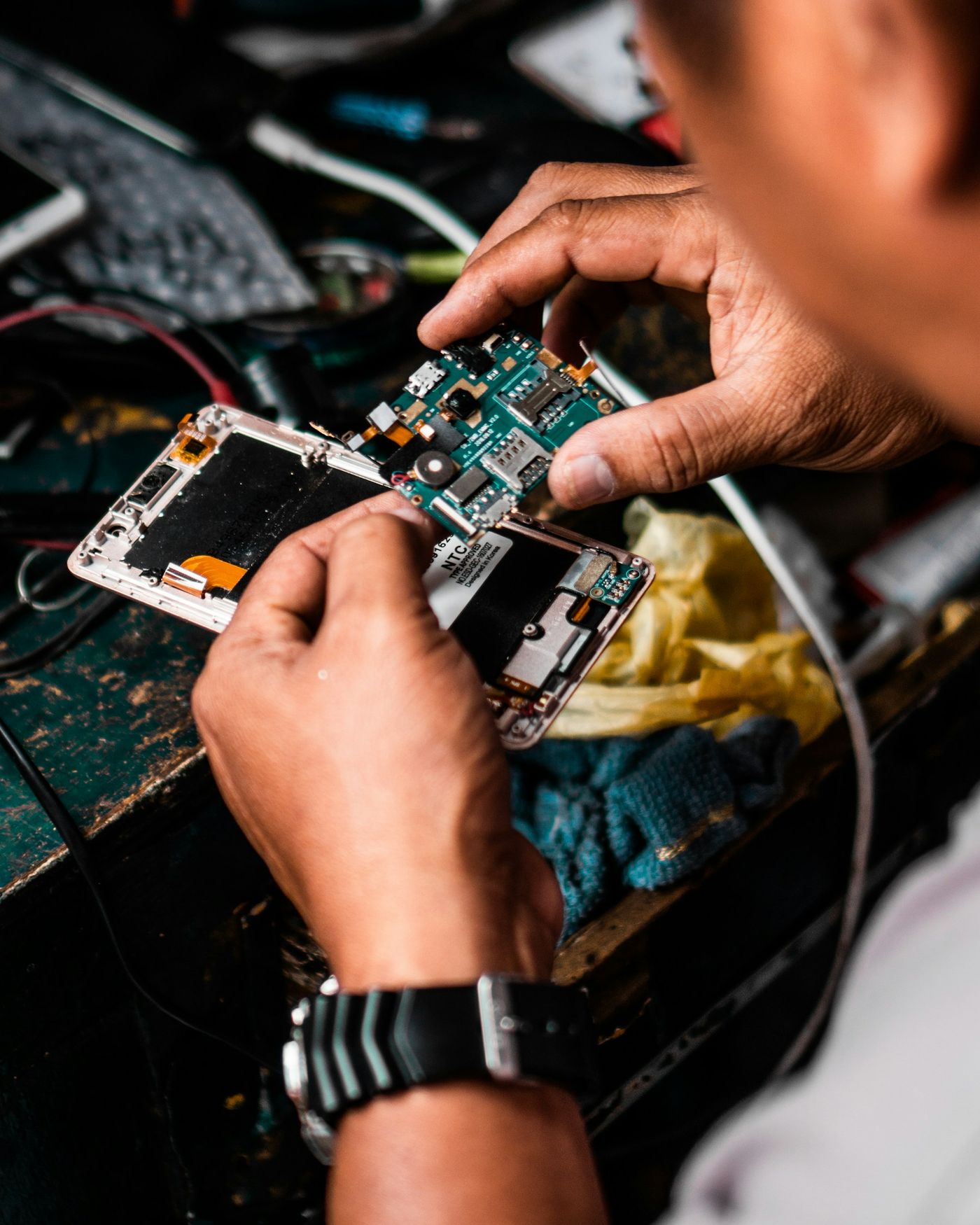
A repair technician’s hands lift the circuit board out of an opened smartphone on a worn workbench
Consumer electronicsA product is judged long after the sale.

Where the rules biteMap of all forty-one industries

  • Claims Advertising & claims: Often shapes the work
  • Regulator Sector regulator: Shapes most of the work
  • Payments Payments: Sometimes shapes the work
  • Data Personal data: Often shapes the work
  • Security Security & incidents: Shapes most of the work
  • Access Accessibility: Sometimes shapes the work
  • AI AI governance: Sometimes shapes the work

What is shifting

The spec sheet grew a repair score, and the charger left the box.

Common chargers, repairability classes, vulnerability reporting and recycling targets now shape the product as much as the launch plan. Each shift names what it demands, with a fact you can check.

Close-up of a USB-C connector at the end of a cable against a soft beige background
One port, written into law for a whole category.
  1. One charging port became the law for a whole product category.

    It demandsPackaging, product pages and set-up guides that say plainly whether a charger is in the box.

    SignalUnder Directive (EU) 2022/2380, phones, tablets, headphones and cameras sold in the EU need USB-C from 28 December 2024, and laptops from 28 April 2026.

  2. Repairability became a grade printed on the label.

    It demandsRepair information, spare parts and update promises designed into the product, not left to the small print.

    SignalSince 20 June 2025, the EU energy label for smartphones and tablets shows a repairability class from A to E, under Regulation (EU) 2023/1669.

  3. Connected devices now owe their buyers security updates and fast disclosure.

    It demandsUpdate, vulnerability and incident processes that owners can see and trust.

    SignalThe EU Cyber Resilience Act makes makers report actively exploited vulnerabilities from 11 September 2026; its other duties apply from 11 December 2027.

  4. Every device sold in India comes back as a recycling target.

    It demandsTake-back journeys, collection points and data that prove the producer’s share.

    SignalUnder the E-Waste (Management) Rules, 2022, in force since 1 April 2023, producers register on the CPCB portal and meet recycling targets with EPR certificates.

The rulebook

Certified before sale, accountable until it is recycled.

India’s registration, energy-label, e-waste and data rules, and the EU product laws for anything you export, read for a typical programme. Your regulatory team keeps sign-off.

Frameworks we build to

  • DPDP Act 2023 — Digital Personal Data Protection Act, 2023
  • ISO/IEC 27001:2022 — Information security management systems
  • OWASP ASVS — Application Security Verification Standard
  • GDPR — General Data Protection Regulation (EU) 2016/679
  • WCAG 2.2 AA — Web Content Accessibility Guidelines

Frameworks we design and build to — not a claim of certification.

Advertising & claims

Often shapes the work

  1. Department of Consumer Affairs

    Right to repair in India

    The national Right to Repair portal brings brands’ manuals, spare-parts and service information to owners; a repairability index for phones and tablets has been recommended to the Department.

    We designRepair information and parts availability are designed into product pages and support, ready for a score.

    Department of Consumer Affairs · Right to Repair portal; committee report on a repairability index, 2025 Official text: Right to repair in India

Sector regulator

Shapes most of the work

  1. Ministry of Electronics and IT · Bureau of Indian Standards

    BIS Compulsory Registration Scheme

    Listed electronics and IT goods, from phones and laptops to adapters and power banks, are registered with BIS against Indian Standards and carry the Standard Mark with their registration number before sale.

    We designEach model’s registration lives in the product record, so packs and listings show the right mark.

    MeitY · Electronics and IT Goods (Requirements for Compulsory Registration) Order, first notified 3 October 2012, as extended Official text: BIS Compulsory Registration Scheme

  2. Bureau of Energy Efficiency

    BEE star labelling

    Star labels are mandatory for listed appliances such as room air conditioners, refrigerators, ceiling fans and water heaters, and the label must match the model on sale.

    We designEnergy data flows from the model record to the label, the pack and every listing.

    Energy Conservation Act, 2001 · BEE Standards & Labelling notifications

  3. Ministry of Environment, Forest and Climate Change · CPCB

    E-Waste (Management) Rules, 2022

    Producers register on the CPCB portal and meet year-wise recycling targets through EPR certificates from registered recyclers; the rules also restrict hazardous substances in new equipment.

    We designTake-back, collection and data flows are designed so the producer’s share can be proved.

    E-Waste (Management) Rules, 2022 (in force 1 April 2023) · CPCB FAQs, January 2024 Official text: E-Waste (Management) Rules, 2022

  4. European Union

    EU common charger and ecodesign rules

    USB-C and an option to buy without a charger, shown by a pictogram; since 20 June 2025, phones and tablets also need batteries rated to at least 800 cycles and a repairability class on the energy label.

    We designPacks, listings and labels for EU markets are generated from one model record.

    Directive (EU) 2022/2380 · Regulations (EU) 2023/1670 and 2023/1669 Official text: EU common charger and ecodesign rules

  5. European Union

    EU Batteries Regulation

    From 18 February 2027, portable batteries in products must be removable and replaceable by the end user, and batteries carry a QR code to their information.

    We designService guides and product pages explain battery replacement for every EU model.

    Regulation (EU) 2023/1542 · Article 11, applying from 18 February 2027 Official text: EU Batteries Regulation

Personal data

Often shapes the work

  1. Ministry of Electronics and IT

    DPDP Act, 2023 and DPDP Rules, 2025

    Device and app data, voice recordings and accounts collected per purpose with consent, withdrawal as easy as consent, and breach reporting to the Data Protection Board.

    We designSet-up flows ask for each permission when it is needed, with consent logged per purpose.

    DPDP Act, 2023 · DPDP Rules, 2025 (core obligations from 13 May 2027) Official text: DPDP Act, 2023 and DPDP Rules, 2025

Security & incidents

Shapes most of the work

  1. European Union

    EU Cyber Resilience Act

    Connected products sold in the EU need security by design and security updates; actively exploited vulnerabilities and severe incidents are reported from 11 September 2026.

    We designUpdate, vulnerability-disclosure and incident processes are built and rehearsed before launch.

    Regulation (EU) 2024/2847 · reporting from 11 September 2026; full application 11 December 2027 Official text: EU Cyber Resilience Act

Compiled 3 October 2026. Our reading of typical programmes, not legal advice. Rules change; your counsel confirms how each one applies to you.

Challenges

Where consumer electronics loses customers and time.

What comes up first in most consumer electronics conversations — outside, at the screen, and inside, in the operation.

Your customers

  1. Set it up without the manual

    Guided set-up, pairing and first use on the device, the app and the web.

  2. Help when it breaks

    Diagnosis, spare parts and authorised service a click away, with warranty status in view.

  3. Know what you are buying

    Energy rating, certification and what is in the box, clear on every listing.

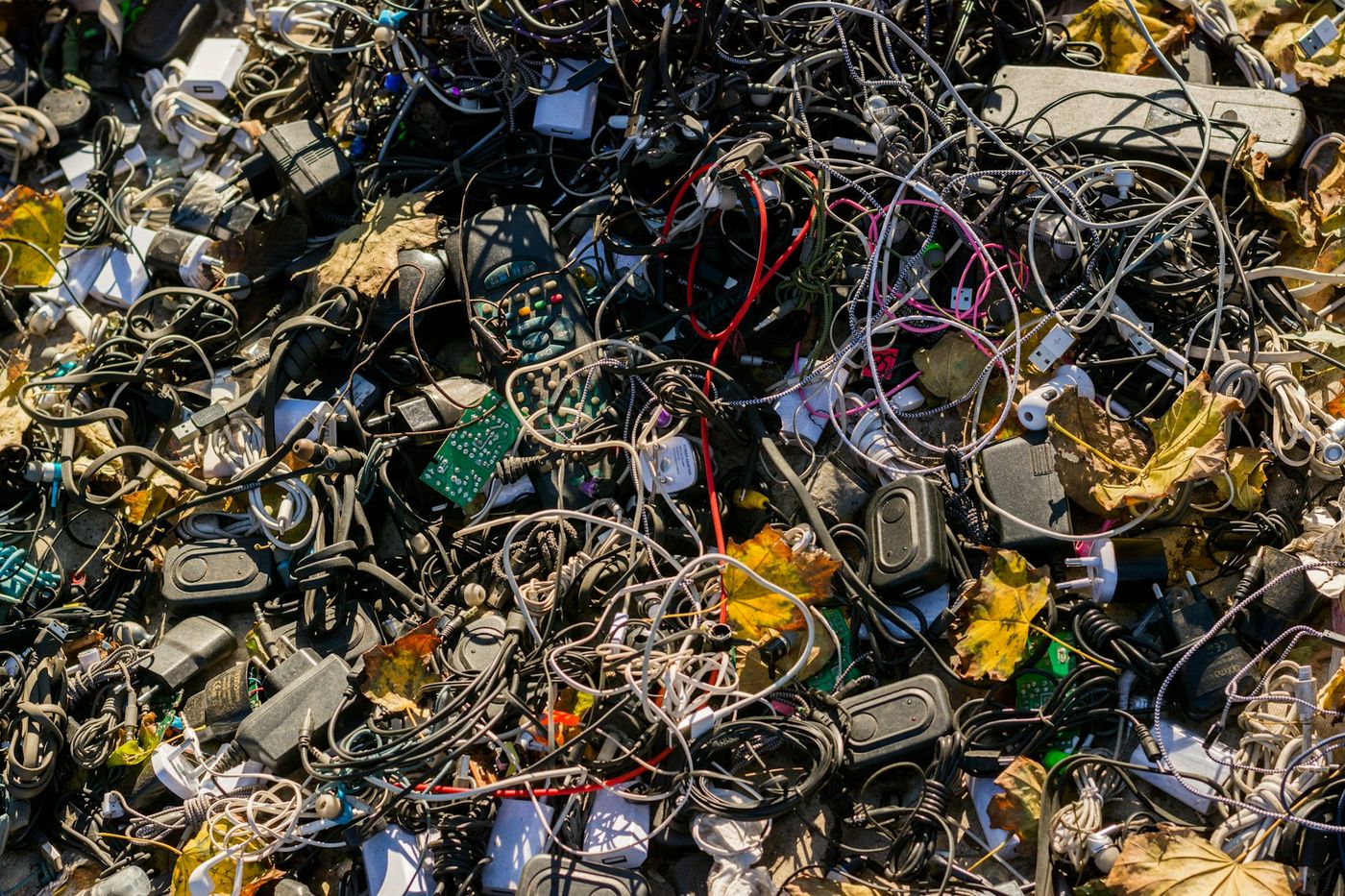
A heap of discarded chargers, cables, remote controls and circuit boards among dry leaves
Every device sold comes back as a recycling target.

Your operation

  1. Certification for every model

    Registrations, energy labels and market approvals tracked model by model and market by market.

  2. Service cost after the sale

    Repeat visits and avoidable returns erode the margin the launch made.

  3. Long tails of models and parts

    Years of models, variants and spare parts to keep documented and supported.

What we build

The disciplines behind a typical consumer electronics programme.

A typical programme here draws on each discipline in this mix. Every line names what it builds for the industry and links to the capability that does the work.

Leads Core Supports Share of a typical programme, by role · illustrative
  1. Model records that feed labels, listings and service, with secure apps and update infrastructure.

  2. Set-up, pairing and service journeys across device, app and web, tested with real owners.

  3. 03

    Brand Design

    Core

    Packaging and label systems that hold every certification mark and still sell the product.

  4. Launch campaigns and retail content with every spec and claim checked against the model record.

  5. 05

    AI Design

    Core

    Diagnostic and support assistants grounded in approved manuals, with evaluations and a hand-off to people.

  6. 06

    Marketing Technology

    Supports

    Registration, warranty and service messaging on one consented owner record.

Programmes

Start with what happens after the sale, then fix the shelf.

The way in walks set-up, service and returns the way owners do and reads every listing and pack against the labelling rules, then ranks the fixes by service cost and by risk. Lengths are typical, never promised.

The way in

After-sales and labelling diagnostic

We walk set-up, service and returns the way owners do, and read listings and packs against the registration, energy-label and e-waste rules.

Package
Sprint · Fixed fee
Typical length
2–3 weeks
It sets
First-time fix rate, as a baseline
  • Product experience audit
  • Technical & code audit

What it hands over

  • A labelling gap register, model by model
  • A service journey map with its costliest failure points
  • A plan for one model record across label, listing and service
Start here
  1. 02Milestone · 4–9 months

    Service and repair platform

    Diagnosis, booking, parts and warranty in one journey for owners, call centres and technicians, integrated with your service network.

    MovesFirst-time fix rate in after-sales service

    Services: End-to-end UX & UI design · Custom CRM or operations platform · System integration

    Enquire about Service and repair platform
  2. 03Project · 8–12 weeks

    Model record for labels and listings

    One record per model holding registration, energy, battery and repair data, feeding packs, labels and every marketplace.

    MovesListing accuracy for certification and energy data

    Services: Content model & headless CMS · Data platform & BI dashboards

    Enquire about Model record for labels and listings
  3. 04Project · 8–12 weeks

    Support assistant with evaluations

    A diagnostic assistant grounded in approved manuals, tested on an evaluation set and handing off to people with the case attached.

    MovesSelf-service resolution rate

    Services: AI knowledge assistant · AI assistant experience design

    Enquire about Support assistant with evaluations

How success is measured

The number we moveFirst-time fix rate in after-sales service

  • First-time fix rate in after-sales service
  • Self-service resolution rate
  • Avoidable returns within warranty
  • Listing accuracy for certification and energy data

AI, under the rules

AI diagnoses and guides, a technician decides the repair.

Each use case has an owner, an evaluation set and a log; safety advice comes only from approved manuals.

Use case 01

Guided diagnosis

Measured byFaults resolved without a visit, on an agreed evaluation set

Tested forOWASP LLM09 · Misinformation

agent / guided-diagnosis Guarded
  1. TaskWalks an owner through checks for a reported fault, using the model’s approved service manual.
  2. GuardrailGives no instruction that involves opening a device or mains wiring; safety-critical faults go straight to service.
  3. HumanA service engineer reviews escalations and every flagged answer.
  4. LogFault reported, steps given and the outcome.

Ships only with its evaluation set, its guardrail and an owner

Use case 02

Technician case summary

Measured byRepeat visits per repair

Tested forOWASP LLM02 · Sensitive information disclosure

agent / technician-case-summary Guarded
  1. TaskSummarises the owner’s history, device logs and photos for the technician before a visit.
  2. GuardrailEvery line links to its source; personal data outside the case is left out.
  3. HumanThe technician decides the repair.
  4. LogThe summary and its sources.

Ships only with its evaluation set, its guardrail and an owner

Use case 03

Pack and listing check

Measured byLabelling errors caught before release

Tested forOWASP LLM05 · Improper output handling

agent / pack-and-listing-check Guarded
  1. TaskCompares packs and listings with the model record for marks, energy data and box contents.
  2. GuardrailIt only flags differences; it never edits a listing or approves artwork.
  3. HumanRegulatory and packaging leads sign off each change.
  4. LogEach mismatch and how it was resolved.

Ships only with its evaluation set, its guardrail and an owner

Work and insights

Case studies stay private until a client approves them.

No consumer electronics client is named or described without written approval. Here is what we have written that bears on the industry.

A typical programme · composite

An appliance brand rebuilt its set-up and service journey around one model record — manuals, spare parts, energy label and warranty — so owners, call centres and technicians see the same answer.

Anonymised and illustrative: the shape a programme takes, never a named client.

Questions

What product, service and compliance leads ask us first.

Something else on your mind? Ask us directly

Q.01Can you help us prepare for the EU rules if we export?

Yes. We design packs, listings, labels and service information from one model record, so the charger pictogram, the repairability class, battery replacement and vulnerability reporting are handled once per model, for every market.

Q.02Do you build device apps as well as websites?

Yes: companion apps, set-up and pairing flows, and the web and support journeys around them, built with secure updates and permissions asked for only when needed.

Q.03Will a support assistant tell owners to attempt unsafe repairs?

No. It answers from approved manuals, gives no instruction that involves opening a device or mains wiring, and hands safety-critical faults to a person with the case attached.

Q.04Can you help with our e-waste obligations?

We design the take-back journeys, collection information and data that support your EPR reporting. Registration and certificate purchases stay with your compliance team and your recyclers.

Let’s build what happens next.

Tell us what you’re building. We’ll answer straight.

Book a discovery call

Three ways to start

  1. 01About 2 minutes

    A quick question

    You get A reply from a lead, not a sales queue

  2. 02About 8 minutesMost useful

    A project brief

    You get Options and a first scope after one call

  3. 03About 15 minutes

    A formal RFQ or RFP

    You get Receipt confirmed and a named bid lead

Every engagement starts with a written scope and a quote agreed before work begins. How each package is priced