

Real estate & infrastructure

Construction & infrastructure. Projects are won on paper and judged on site.

Every claim in a tender becomes a site visit.

Contractors and EPC firms, infrastructure developers, building-materials makers, design consultancies and facility managers, selling to public buyers and developers who score every bid. We build tender and capability content evaluators can check, project and stakeholder communication, safety and site apps, and product information for materials that carries their certificates.

The number we move
Bid win rate
Where we work in construction & infrastructure
  • Contractors & EPC
  • Infrastructure developers
  • Building materials
  • Architecture & engineering firms
  • Facility management
Rules mapped
8 rules · 4 areas
Disciplines that lead
TechnologyProduct
Frameworks we build to
ISO 9001:2015 — Quality management systemsISO 14001:2015 — Environmental management systemsISO/IEC 27001:2022 — Information security management systemsDPDP Act 2023 — Digital Personal Data Protection Act, 2023WCAG 2.2 AA — Web Content Accessibility Guidelines
A cable-stayed bridge under construction, with a tower crane beside the pylon at dusk
Construction & infrastructureProjects are judged long after the bid.

Where the rules biteMap of all forty-one industries

  • Claims Advertising & claims: Often shapes the work
  • Regulator Sector regulator: Shapes most of the work
  • Payments Payments: Sometimes shapes the work
  • Data Personal data: Often shapes the work
  • Security Security & incidents: Sometimes shapes the work
  • Access Accessibility: Often shapes the work
  • AI AI governance: Sometimes shapes the work

What is shifting

Bids moved online, and the site moved into one code.

Site labour law was consolidated, public procurement went online by rule, carbon reached the border for steel and cement, and materials sell on certificates. Each shift names what it demands, with a fact you can check.

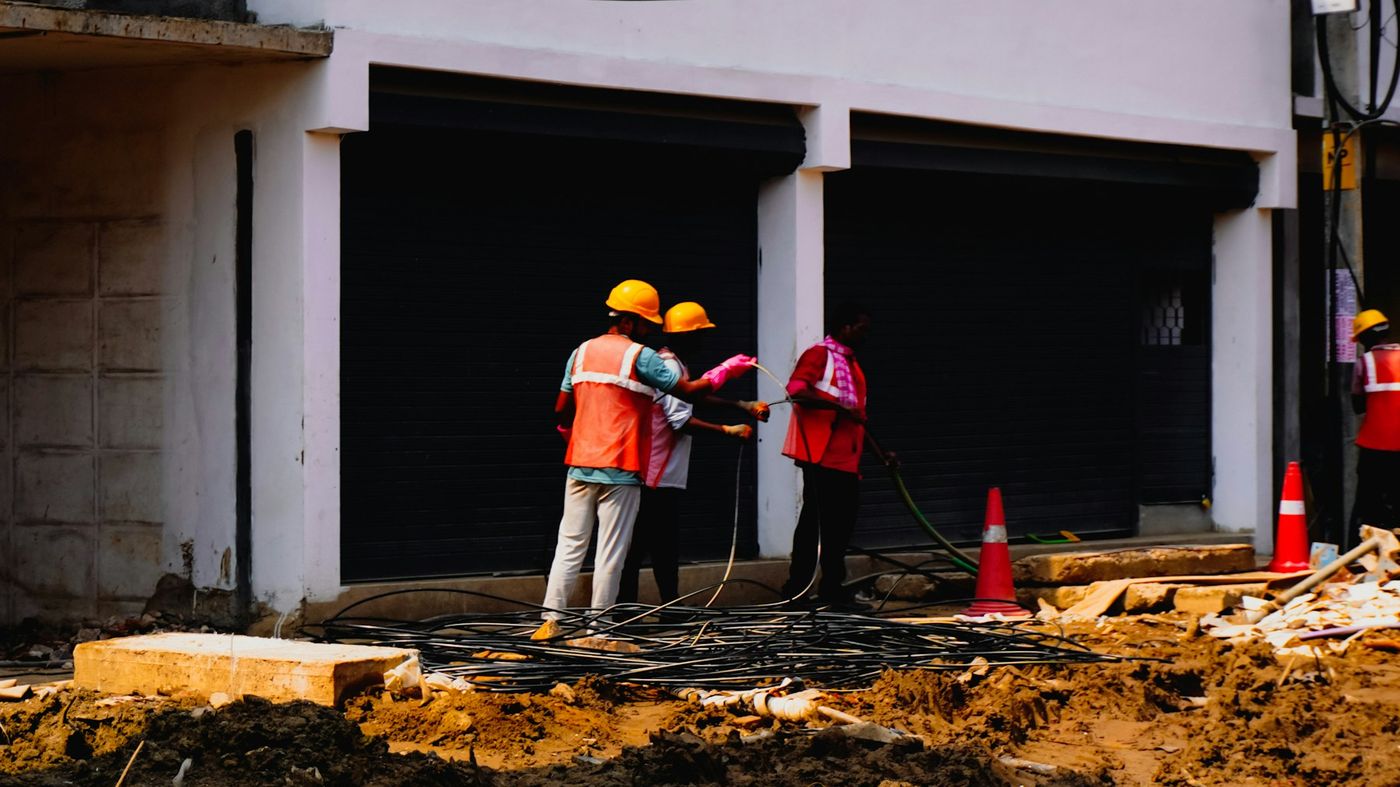
Workers in hard hats and high-visibility vests handle cables at a construction site
Safety lives on site, and in the records.
  1. Site labour law moved into one code.

    It demandsSite apps and records built for the OSH Code’s notices, registrations and welfare duties.

    SignalThe OSH Code, in force since 21 November 2025, replaced the 1996 building and construction workers act among 13 laws it consolidated, the labour ministry says.

  2. Public buyers procure online, by rule.

    It demandsCapability and compliance content structured for e-procurement portals and their evaluators.

    SignalThe General Financial Rules require central ministries to receive all bids through e-procurement portals and to buy common-use goods and services on GeM.

  3. Embedded carbon in steel and cement is priced at the EU border.

    It demandsProduct carbon data for exporters of steel and cement, shipment by shipment.

    SignalSteel and cement are among the goods covered by the EU CBAM, whose definitive period began on 1 January 2026, with certificates on sale from 1 February 2027.

  4. Materials are sold on their certificates.

    It demandsProduct pages that show the Standard Mark, the IS number and the test certificates.

    SignalBetween 2012 and 2024 the government brought 151 carbon, alloy and stainless steel products under quality control orders, the steel ministry reports.

The rulebook

Every bid is scored, every site is inspected.

Environmental clearance, the OSH Code, e-procurement rules, quality orders, accessibility standards and the green-claims rules, read for a contractor or materials maker. Your counsel keeps sign-off.

Frameworks we build to

  • ISO 9001:2015 — Quality management systems
  • ISO 14001:2015 — Environmental management systems
  • ISO/IEC 27001:2022 — Information security management systems
  • DPDP Act 2023 — Digital Personal Data Protection Act, 2023
  • WCAG 2.2 AA — Web Content Accessibility Guidelines

Frameworks we design and build to — not a claim of certification.

Advertising & claims

Often shapes the work

  1. Central Consumer Protection Authority

    CCPA greenwashing guidelines, 2024

    ‘Green’, ‘sustainable’ or rating claims must be specific and backed by credible certification, such as a green-building rating, or by reliable evidence.

    We designMarketing names the rating, its level and its scope — never ‘green’ alone.

    CCPA · Guidelines for Prevention and Regulation of Greenwashing or Misleading Environmental Claims, 15 October 2024 Official text: CCPA greenwashing guidelines, 2024

Sector regulator

Shapes most of the work

  1. Ministry of Environment, Forest and Climate Change

    EIA Notification, 2006 — building and township projects

    Building and construction projects of 20,000 to 1,50,000 sq m built-up area, and townships of 50 ha or 1,50,000 sq m and more, need prior environmental clearance, applied for through PARIVESH.

    We designProject pages and stakeholder updates track each clearance against the programme.

    MoEFCC · S.O. 1533(E), 14 September 2006, as amended to July 2026 · Schedule items 8(a) and 8(b) Official text: EIA Notification, 2006 — building and township projects

  2. Ministry of Labour and Employment

    OSH Code, 2020 — building and other construction work

    In force since 21 November 2025: electronic notice of the start and end of construction work, an appointment letter for every worker, and a licence for contractors employing 50 or more contract workers.

    We designSite apps record notices, appointment letters, registrations and safety observations.

    OSH Code, 2020 · labour ministry’s compliance handbook for employers, February 2026 Official text: OSH Code, 2020 — building and other construction work

  3. Ministry of Finance (Department of Expenditure)

    General Financial Rules, 2017 — e-procurement and GeM

    Central ministries receive all bids through e-procurement portals and buy common-use goods and services available on GeM through GeM.

    We designCapability, certificates and references are structured for portal submission and evaluation.

    GFR, 2017 · rules 149 and 160 · as updated to 31 January 2026 Official text: General Financial Rules, 2017 — e-procurement and GeM

  4. Ministry of Steel · DPIIT · BIS

    BIS quality control orders — steel and cement

    Steel products under the steel quality control orders, 151 of them by 2024, and cement under its own order must carry the BIS Standard Mark before sale or import.

    We designProduct pages and batch documents show the IS number, the licence and the test certificates.

    BIS Act, 2016 · section 16 · steel QCOs, 2012–2024 · Cement (Quality Control) Order, 2003 Official text: BIS quality control orders — steel and cement

  5. European Union

    EU carbon border adjustment mechanism

    EU importers of covered steel and cement pay for embedded emissions from 1 January 2026; a 50-tonne yearly threshold exempts small importers, and certificates are sold from 1 February 2027.

    We designEmbedded-emissions data is structured per product and shipment for EU buyers’ declarations.

    Regulation (EU) 2023/956, as amended by Regulation (EU) 2025/2083 of 8 October 2025 Official text: EU carbon border adjustment mechanism

Personal data

Often shapes the work

  1. Ministry of Electronics and IT

    DPDP Act, 2023 and DPDP Rules, 2025

    Site attendance, worker IDs and camera footage hold personal data: collected for a stated purpose, protected, and kept no longer than needed, from 13 May 2027.

    We designSite apps collect only what each register needs and delete it on schedule.

    DPDP Act, 2023 · DPDP Rules, 2025 (core obligations from 13 May 2027) Official text: DPDP Act, 2023 and DPDP Rules, 2025

Accessibility

Often shapes the work

  1. Ministry of Housing and Urban Affairs · DEPwD

    Harmonised accessibility standards for the built environment

    The Harmonised Guidelines and Space Standards for Universal Accessibility in India, 2021 were notified as rules under the RPwD Act in 2023.

    We designAccessibility is designed into drawings and checked at handover, and project websites meet WCAG 2.2.

    RPwD Act, 2016 · section 40 · RPwD (Amendment) Rules, 2023 Official text: Harmonised accessibility standards for the built environment

Compiled 3 October 2026. Our reading of typical programmes, not legal advice. Rules change; your counsel confirms how each one applies to you.

Challenges

Where construction & infrastructure loses customers and time.

What comes up first in most construction & infrastructure conversations — outside, at the screen, and inside, in the operation.

Your customers

  1. Bids that can be checked

    Experience, capacity and compliance shown in the form evaluators score.

  2. Progress people can see

    Communities, buyers and lenders told what is happening and when.

  3. Safety that is visible

    Incidents, permits and inspections recorded, not remembered.

Silhouettes of tower cranes against a pink evening sky
Every crane is a programme with a clock.

Your operation

  1. Hundreds of sites, one standard

    Site teams, subcontractors and suppliers working to the same process.

  2. Clearances on the critical path

    Environmental clearance, approvals and permits tracked against the programme.

  3. Materials with their paperwork

    Certificates, test reports and marks attached to every batch.

What we build

The disciplines behind a typical construction & infrastructure programme.

A typical programme here draws on each discipline in this mix. Every line names what it builds for the industry and links to the capability that does the work.

Leads Core Supports Share of a typical programme, by role · illustrative
  1. Bid libraries, project portals and integrations with ERP and project-control systems.

  2. Site, safety and handover apps designed with site teams and subcontractors.

  3. 03

    Brand Design

    Core

    Corporate and capability brands that win prequalification, and product brands for materials.

  4. Tender content, project stories and stakeholder campaigns with facts evaluators can verify.

  5. 05

    AI Design

    Core

    Assistants that draft bids from approved evidence and summarise site reports.

  6. 06

    Marketing Technology

    Supports

    Specifier and dealer journeys for building materials.

Programmes

Rebuild the evidence first, and every bid gets faster.

The way in takes recent tenders apart to show where scores were lost. Lengths are typical, never promised.

The way in

Bid evidence audit

We take recent tenders apart and show where scores were lost to missing, outdated or unprovable evidence.

Package
Sprint · Fixed fee
Typical length
2–3 weeks
It sets
Bid win rate, as a baseline
  • Product experience audit
  • Technical & code audit

What it hands over

  • An evidence gap register by bid criterion
  • A structure for a reusable bid library
  • A checklist for e-procurement submissions
Start here
  1. 02Project · 8–12 weeks

    Bid library and capability site

    Approved references, certificates, team CVs and method statements in one library, published as a capability site.

    MovesTime to assemble a compliant bid

    Services: Custom CRM or operations platform · Website · Content strategy & editorial plan

    Enquire about Bid library and capability site
  2. 03Milestone · 4–9 months

    Site safety and progress app

    Permits, inspections, incidents and progress recorded on site, with the notices and registrations the OSH Code expects.

    MovesSite incidents reported the same day

    Services: User research & usability testing · End-to-end UX & UI design · Web or mobile app

    Enquire about Site safety and progress app
  3. 04Project · 6–10 weeks

    Materials product information

    Product pages and specifier tools that carry IS numbers, marks and certificates for every batch.

    MovesSpecifier enquiries for materials

    Services: Content model & headless CMS · Website

    Enquire about Materials product information

How success is measured

The number we moveBid win rate

  • Bid win rate
  • Time to assemble a compliant bid
  • Site incidents reported the same day
  • Specifier enquiries for materials

AI, under the rules

AI drafts from approved evidence, managers sign every bid.

Each use case works from approved records only, has an evaluation set and a log, and no model submits a bid or closes a safety observation.

Use case 01

Bid drafting assistant

Measured byTime to assemble a compliant bid

Tested forOWASP LLM09 · Misinformation

agent / bid-drafting-assistant Guarded
  1. TaskDrafts technical bid sections from the approved library of references, CVs and method statements.
  2. GuardrailUses approved evidence only and marks every gap instead of filling it.
  3. HumanThe bid manager approves every submission.
  4. LogSections drafted, with their sources.

Ships only with its evaluation set, its guardrail and an owner

Use case 02

Site report summariser

Measured byProgress updates sent on schedule

Tested forOWASP LLM05 · Improper output handling

agent / site-report-summariser Guarded
  1. TaskTurns daily site reports and photos into progress summaries for clients and lenders.
  2. GuardrailQuotes recorded data only and forecasts no completion date.
  3. HumanThe project manager approves each update.
  4. LogReports used and summaries sent.

Ships only with its evaluation set, its guardrail and an owner

Use case 03

Safety observation triage

Measured byTime from observation to action

Tested forOWASP LLM01 · Prompt injection

agent / safety-observation-triage Guarded
  1. TaskSorts safety observations and near misses by severity for the site safety officer.
  2. GuardrailNever closes an observation; high-severity items alert a person at once. Free text from the field is treated as untrusted.
  3. HumanThe safety officer decides every action.
  4. LogObservations, triage and actions.

Ships only with its evaluation set, its guardrail and an owner

Work and insights

Case studies stay private until a client approves them.

No construction & infrastructure client is named or described without written approval. Here is what we have written that bears on the industry.

A typical programme · composite

An EPC contractor moved its project references, certificates and team CVs into one structured library, so a compliant technical bid is assembled from current, approved evidence instead of old documents.

Anonymised and illustrative: the shape a programme takes, never a named client.

Related reading

Nothing published on construction & infrastructure yet. Ask us what we are seeing in the industry.

Ask us

Questions

What bid, project and safety leads ask us first.

Something else on your mind? Ask us directly

Q.01Can you help us win public tenders?

We help you present evidence evaluators can score: references, certificates, CVs and methods structured for e-procurement portals and GeM. Pricing and technical solutions stay yours.

Q.02Do you build site safety apps?

Yes: permits, inspections, incidents and progress, designed with site teams and subcontractors, with the records the OSH Code expects.

Q.03Can we call our project ‘green’?

Say what is green and how you know it: name the rating, its level and its scope, such as a green-building certification, as the CCPA’s greenwashing guidelines expect.

Q.04Do you work with building-materials makers?

Yes: product information with IS numbers, marks and certificates, specifier tools and dealer journeys.

Let’s build what happens next.

Tell us what you’re building. We’ll answer straight.

Book a discovery call

Three ways to start

  1. 01About 2 minutes

    A quick question

    You get A reply from a lead, not a sales queue

  2. 02About 8 minutesMost useful

    A project brief

    You get Options and a first scope after one call

  3. 03About 15 minutes

    A formal RFQ or RFP

    You get Receipt confirmed and a named bid lead

Every engagement starts with a written scope and a quote agreed before work begins. How each package is priced